Thursday, 1 September 2016

12 video SEO tips to help improve your search rankings

Video content has skyrocketed over the past few years, and therefore it’s time to examine how adding SEO to your videos can impact rankings.Camera lens

Video is everywhere and this is both a blessing and a curse, especially if you’re trying to stand out from the rest of the crowd at the top of search engine results pages. So consider the following video SEO tips to help put you ahead of the competition…

1) Add value


As common as it may sound, your content should be relevant to your audience, adding value that will convince the users to dedicate the right time to watch your video. The more quality videos, the bigger the chances to serve as an authority, build a trusting relationship with your audience and increase the conversions.

2) Host video to your own domain


If you are creating video content to improve the ranking of your site, then you need to host the video to your own domain, in order to ensure that search engines don’t direct the traffic to another site.

Let’s say for example that you prefer to upload the video on YouTube and add a link back to your site in the description. This may be a good idea if you’re trying to expand your reach, but in terms of SEO, search engines will crawl the Youtube video first, rather than your site.

Moreover, it may be a good idea to create a new page for each video, as Google mentions that this makes the indexing easier.

3) Create interactive content


How about adding the necessary interactive elements to your videos to activate the viewers? Whether it’s the actual content, an annotation, or the caption, there are many ways that you can “gamify” a video to make it more interactive and engaging, helping grab the users’ attention.


You can even split the video into shorter clips, allowing your viewers to pick which one they prefer to watch, a strategy which has been implemented in many successful campaigns.

4) Create relevant metadata


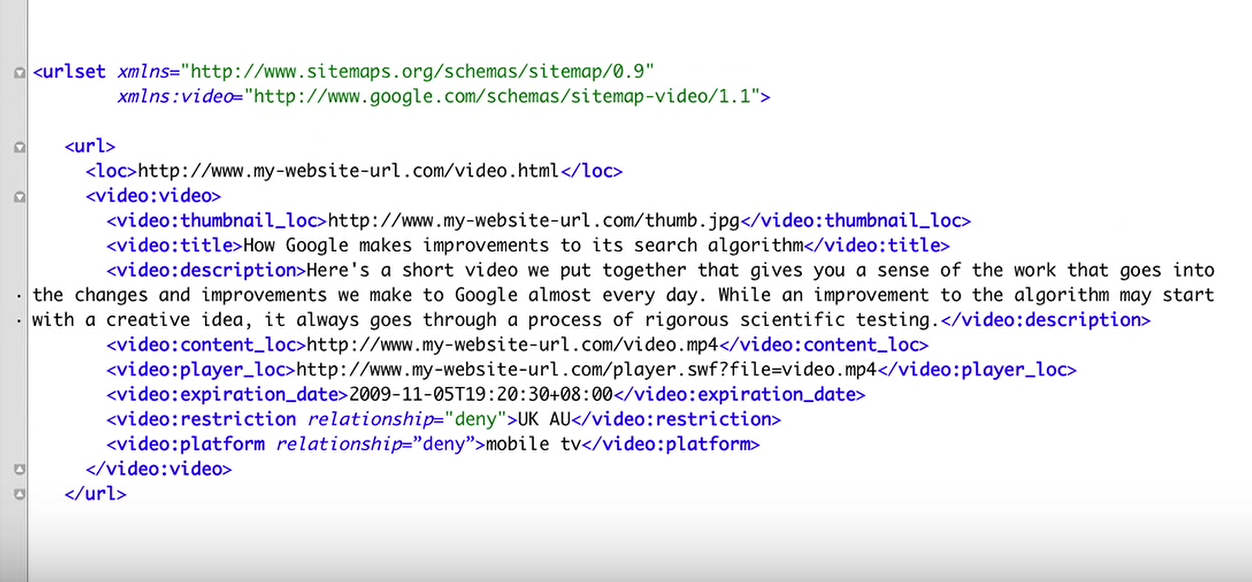
Your video should provide the necessary details to help search engines index it and according to Google, the title, the description and the thumbnail are the most important pieces of information.

Metadata offers more details about the video title, the description, the length of the video and its file name.

Video title has to be short and concise, while the description may provide more details and keywords, boosting the ranking of your content.

Last but not least, make sure the file name of your video is relevant, instead of a generic one like “video415.mph”, as this is another way to describe your content for search engines.

Here’s more advice on how to optimise video for YouTube.

5) Optimise with keywords


Keyword research may also occur in video SEO and it may help you discover the most relevant content for your target audience. Is there a particular keyword, or phrase that could lead to better results? What’s the best way to describe your video?

Feel free to experiment with different keywords and always remember to create descriptive, but also legible content, helping both your audience, but also the search engines.

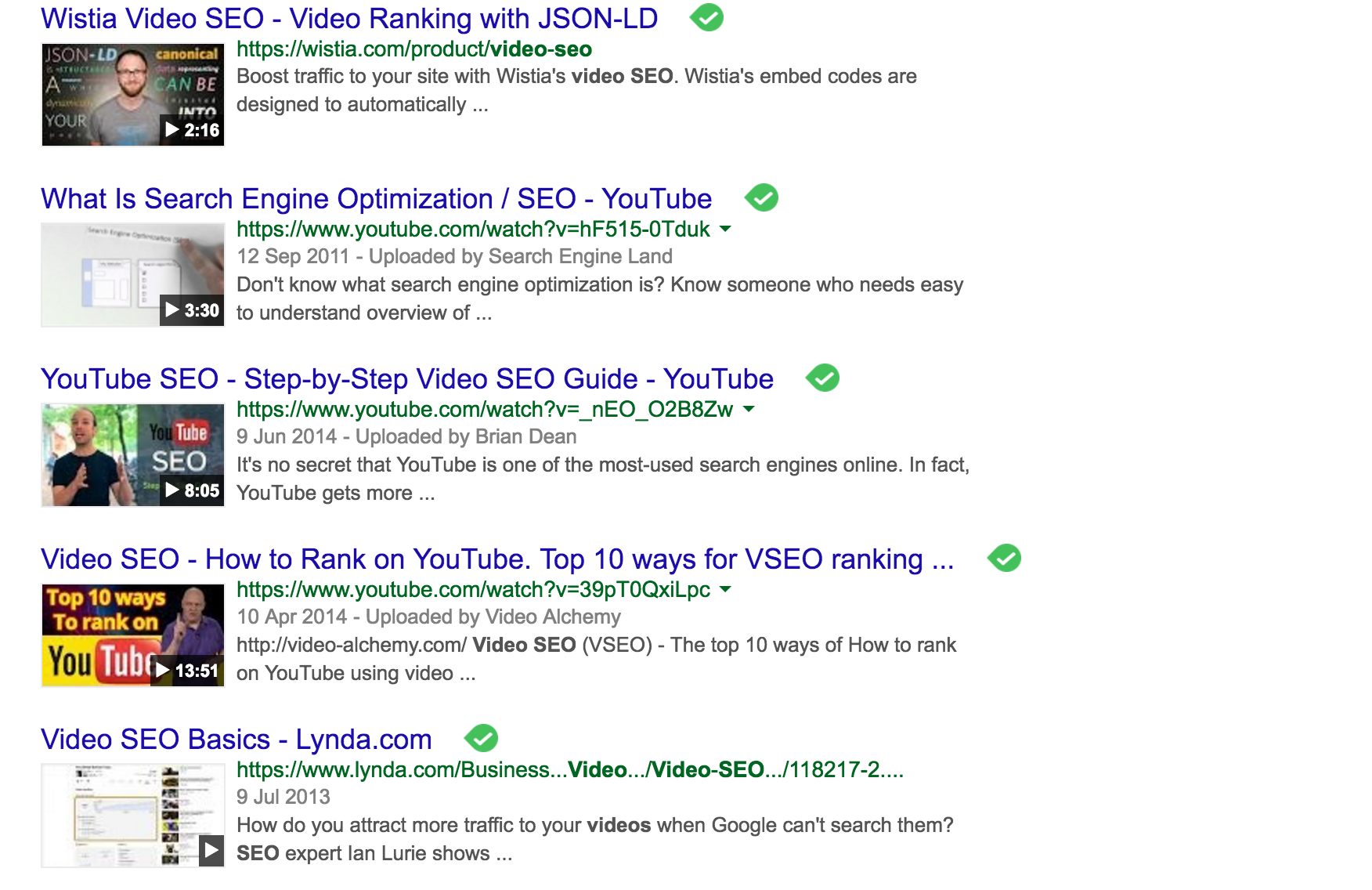
6) Focus on the thumbnail


The video’s thumbnail is among the first things that users will notice and it might affect their decision whether they’ll actually click on the video.
video SEO

How about picking a thumbnail that is clear and relevant to the content of your video?

7) Make “shareable” content


It’s not just about creating an interactive video, it’s also about producing content that your audience will appreciate.

“Shareable” content is unique, creative and adds value for its target audience, making the sharing easier and the reach bigger.

It’s the quality of your content that will make your video stand out from the rest, and a clear call-to-action may also affect your site’s authority, with new links and mentions.

Unconscious Gender Bias: We Are All Guilty

“Don’t be such a drama queen.”


“Would you man up?”


“In this office, it’s every man for himself.”


All pretty innocent expressions, wouldn’t you think? In fact, I can probably bet that each and every one of us has used these words and phrases at some point—as well as others—both in our professional and personal lives. After all, there isn’t anything offensive or off-color here, right?


Maybe not entirely true. The examples I provided at the beginning of the article could be considered sexist, even though we all probably use them innocently and without looking to offend (women included). However, words do matter. What we say to each other has the ability to either prevent or continue to promote unconscious bias. In order to change and improve our standards, we need to be aware of what is coming out of our mouths as well as the stereotypes we paint of other people unintentionally.


It’s Not Exactly an Episode of Mad Men, But…


No, our workplaces don’t exactly look like the set of Mad Men anymore—thank goodness. And of course, if Don Draper operated in today’s world he would have been hit with some pretty significant sexual harassment lawsuits on behalf of Joan, Peggy, and Co.


While blatant sexism in our workplaces might have toned down, the fact remains is that the language we tend to use is still very gender specific. And the gender that is most often highlighted in language is male-based. Think about it. Something as simple as “Hey you guys!” (something I use all the time) shows that “the man” is the anchor of our language, and “woman” is not. Even the words associated with leadership posts are traditional in the idea that we look to the “chairman” or the “congressman.” How many of us actually have to stop, pause, and think for a moment before using a word like “chairperson” or even more far-fetched… “chairwoman.” The assumption is that it is a man in charge—and with it, stereotypes continue to be promoted.


Pink vs. Blue Roles


The classification of “pink vs. blue” roles, responsibilities, and stereotypes has long been an issue. For instance, what image pops in your head when someone says the word “secretary” or “nurse”? It’s a woman, right? What about “soldier” or “engineer”? Probably a man. We definitely like to classify what gender should be filling what roles. And we do this automatically—our conscious mind isn’t even paying attention to our own discriminatory practices.


I personally know that I am also guilty of this stereotype, and I consider myself a feminist. For instance, my wife and I were at a party once, and she got into a discussion with another guest about something cooking related. When my wife posed a question to this man on the topic, he quickly turned it around on her by saying, “How would I know that? I’m not a girl.” The assumption? The kitchen is a woman’s place; why would a man bother with learning anything about what goes on in that room of the house?


My wife was offended, even though I, at first, didn’t immediately go where her mind did. But when she explained that the stereotype the other partygoer just threw in her face was in fact sexist, I came around to her train of thought. She was right.


So the question is how do we work to be aware of the language and beliefs that allow sexism to perpetuate, albeit sometimes unconsciously? I think that the answer lies with mindfulness—of working to prevent ourselves from walking into stereotypes and breaking free from the pre-programming that each of us are wired with as humans. I’m not saying that any of us have bad intentions when we assume an engineer is a man or a secretary is a woman – it’s an unconscious bias we all have. Rather, by opening ourselves up to a new level of consciousness related to gender bias, we can create new levels of inclusion and equality in our workplaces.


Words with Gender Bias


Here is a more exhaustive list of phrases, verbiage and actions we use that has unconscious gender bias:


  • “You do this [TASK] really well for a girl/woman.”

  • “Calm down.” In response to when a woman expresses her opinion (something I am guilty of with my wife)

  • “Hey! Why don’t you smile?”

  • “You’re lucky I didn’t [DO SOMETHING MUCH WORSE].” Women are frequently told to be thankful when something relatively worse hasn’t happened to them.

  • “Would you man up?”

  • “Stop acting like a little girl!”

  • “Oh, don’t be such a pu*^y!”

  • “That guy was completely castrated.”

  • “Don’t be so dramatic.”

  • “Are you on your period?”

  • Assuming women in the group will take notes

Do you have any stories or anecdotes about this topic? I welcome you to share your own experience with gender bias in the workplace and beyond.


Source: B2C

The 411 on LLC Start-Up Costs Across the U.S.

When it comes to starting your own endeavor, choosing the best business structure is one of the most important decisions you’ll make. A popular option is to form a Limited Liability Company (LLC) — which acts as a separate legal entity from the owner(s) of the business. Benefits of this structure include asset protection, credibility, deductible employee benefits, tax savings and greater ease in raising needed funds. Each state has different rules when it comes to starting an LLC — including initial paperwork and the associated fees to file it. The fee range across the U.S. is somewhat extreme, from a low of $40 to a whopping $500. To help make it easier to visualize what each state charges, MBA@UNC, UNC Kenan-Flagler Business School’s online MBA for executives, created a map of LLC startup costs from around the country. Here, we’ll take look at the nuts and bolts of an LLC and dig into the four states with the highest fees.


Map of LLC Startup Costs in Each State Across the U.S.


LLC basics


Throughout the nation, the LLC basics are fairly consistent in terms of what this business structure looks like. Here’s a description from the Small Business Administration (SBA):


“A limited liability company is a hybrid type of legal structure that provides the limited liability features of a corporation and the tax efficiencies and operational flexibility of a partnership.”


Each state has its own rules, but there are some basic nuts and bolts that generally apply to them all, including regulations related to:


  • Business name—it has to be unique and unrestricted.

  • Articles of organization—include general information and member names.

  • Licenses and permits—may be required, depending upon what you do.

  • Operating agreements—are recommended if you have more than one member.

  • An announcement—may be needed, depending upon your state.

  • Hiring employees—has a unique set of rules, so be sure to check them out.

States with the highest fees


If you live in Hawaii, Arizona, New Mexico, Colorado, Iowa, Arkansas, Mississippi or Kentucky — you’re in luck. These states have the lowest fees in the nation, topping out at $50 max. However, if you live in Massachusetts, Illinois, Tennessee or Texas—you’d better be ready to write a big check. Fees in these four states are higher than all others, with the top two at $500 each and $400 for the remainder. For each state, there may be other things to consider when deciding whether an LLC is the best option. Here are a few additional considerations from the highest fee states on the list:


  • Massachusetts: In addition to the initial filing costs, a fee to file the required annual report is charged as well. In the Bay State, it’s $500 every year. Here, the manner in which you tailor your LLC is significant, too. Attorney Daniel Karpman writes, “Because the Massachusetts statute allows members to tailor the structure of the organization to their needs, avoiding characterization as a corporation requires careful planning.” Known as a “flexible” LLC law, failure to pay attention to specific details when you’re filing could lead to unexpected taxes down the road.

  • Illinois: The Land of Lincoln also tops the list in LLC filing fees—at $500 a pop. Some business advocates — like attorney Jacob Huebert — say the state unfairly penalizes LLCs, since rates to both start and maintain a corporation are much lower. Initial filing fees for corporations are only $150, reserving a name is only $50 (for an LLC it’s $300) and it’s just $5 to dissolve a corporation — but if you want to retire your LLC you’ll have to pay $100. However, Huebert notes that these intermittent fees certainly aren’t the only consideration, since selecting the LLC structure may save big in terms of time and taxes. Corporations require a lot more paperwork ongoing, and typically owners get taxed twice — once for the business income, and again on their personal income from the business.

  • Tennessee: The Volunteer State shares the dubious honor with Texas as being the region that’s second most expensive to start an LLC — with both charging $400 for initial filing fees. As with every state, there are unique factors to consider, and in Tennessee, some of the most significant are related to the state tax structure. In an article, Jay Hoover, CPA, briefly summarized the issue, writing, “In Tennessee, state taxes play an important role in entity selection, which is primarily due to the fact that Tennessee does not impose a tax on earned income from sole proprietorships and partnerships. Conversely, Tennessee imposes franchise and excise taxes on corporations, limited partnerships, LLPs and LLCs. The franchise tax is based on assets and capital utilized by the business, while the excise tax is based on the profits of the business.”

  • Texas: When it comes to LLC fees, it’s certainly true that “everything’s bigger in Texas.” As noted previously, the Lone Star State’s fees are second from the top — yet the state is advertised as being a great place to become an entrepreneur. With a slogan of being “Wide Open for Business,” the Texas small business environment is touted as a place to thrive due to geographic location, a highly-skilled workforce, a low tax burden, a reasonable cost of living and a predictable regulatory environment. A unique factor to consider in Texas regarding an LLC is the requirement to pay a “margin tax.” According to attorney Phyllis Lambert, this tax is imposed on almost all Texas businesses except sole proprietorships and a few instances of general partnerships.

Regardless of what state you plan to do business in, starting as an LLC may be a good choice. Key considerations depend upon your specific needs regarding location, taxation and liability protection. A good first step is to learn all you can about the various benefits and limitations of each business structure — and then find a trusted adviser or two to obtain the best advice. The U.S. Small Business Administration (SBA) offers a wealth of resources to help you get started — and then grow your business after you’ve opened your doors.


Source: B2C

Have You Been Bitten by a Snake Oil Salesman?

According to history, between 1849 and 1882, around 180,000 Chinese immigrants moved to United States. They were offered to sign a 5-year contract with very low wages. When the Chinese workers moved in, they brought different medicines – including “snake oil”. This snake oil was made from the oil of the Chinese water snake. It helps reduce inflammation because it is rich in omega-3.Chinese workers use this oil as a liniment to rub on their joints after a long day at work. It is known to be effective in treating arthritis and bursitis. It is said that Americans were amazed of the effect since the Chinese workers began sharing the oil with them.
The History of Snake Oil Salesman
Because of its popularity, Clark Stanley, also known as the “Rattlesnake King” decided to make their own version for Americans to use. However, he used rattlesnakes because there were no Chinese water snakes in America. However, it is less effective than the original Chinese snake oil and did not contain a drop of actual snake oil.Snake oil salesman and traveling doctors (also known as quack doctors) are the ones selling Clark Stanley’s snake oil liniment. Eventually, Americans banned this product as it is not effective in treating different conditions. It was around then that the snake oil becomes a symbol of fraud in the US.Until now, Americans would still refer a “Snake Oil Salesman” as someone who sells an product that claims their product actually works. They are considered as someone who misleads their customers just to gain profit from them. In order to push their products, a “snake oil salesman” would usually deceive their prospects that their products are effective and customers can benefit from it in order to get money from them.So how will you know if you’re dealing with a ‘Snake Oil Salesman’? Here are some signs that you’re dealing and have been bitten by a Snake Oil Salesman.

#1: They keep on pushing their product despite too many objections.


This type of salesmen doesn’t care whether you need the product or service. Their only goal is to get your money and for you to buy to them.


#2: They practice poor customer service.


A salesperson who failed to acknowledge their customers means they don’t value who you are. Also, when you hear a salesperson complain or say something bad about their competitors, it’s considered a sign. This way of pursuing a customer is not healthy.


#3: They’re the ones who are doing all the talking.


They don’t practice asking questions to gauge if their prospect has a need on what they’re offering. They wouldn’t even let you ask questions or worst, they disregard your question. Instead, they just keep on pitching their product and how you can benefit on it.


A good salesman use CHAMP lead qualification methodology to qualify their prospects and to know their needs and challenges. Listen more than you talk and be able deliver the best solution.


#4: They focus more on sales to meet their deadline.


We all know that every salesperson has a quota or a deadline to meet. Their goals when speaking with you is to get a sale, not to find out if this is something you might be interested because your company needs it.


A good salesman knows when the lead is ripe or when it is still unqualified and needs further nurturing.


Part of this lead nurturing process is sending digital downloadables that could convince them even more. Here are the digital freebies in sales that could be use.


#5: They’re claiming their product is the best.


They pitch in their product by being defensive. They claim that their product don’t have any failed experiments prior to launching it. And that everyone can benefit on their product in all possible ways.


Take note of these signs when dealing with any salesperson. In sales, all sales reps must gain the trust of their customers in order for them to patronize and consider using the product over and over again. Providing customers with good quality product or service is important because that’s one way of building trust and relationships with your current and future customers.


“A good salesman must consider your need for the product and service.”


This post originally appeared at The Savvy Marketer’s Blog


Source: B2C

3 Ways Marketing Analytics Benefit Political Communications

By now, it’s common knowledge that geopolitical organisations, for good or ill, have learned to excel at the game of digital influence, and impressively so. As global internet connectivity and digital communications drive down the barriers to entry for meaningful political engagement, such organisations have become increasingly adept at running their operations in ways akin to some of the world’s best-known brands.


For this reason, nation states and corporations are becoming increasingly concerned at the ability of dangerous non-state actors to influence global policy making and public opinion. The most innovative brands in the world have developed well conceived strategies to mitigate perceived threats, gain market share and influence public opinion. However, the same can not readily be said of political communication brands.


As the world becomes increasingly data-driven and political organisations make better use of their digital presences, corporations and organisations must reconsider and refresh their analytics strategies, and turn those insights to competitive advantage. Increasingly, decision makers must ask themselves, whether their current analytics programmes improve the ROI or effectiveness of political communications?


The means to understand the behaviour of key politically-motivated audiences and groups has never been more robust, or complicated. The dizzying range of digital touchpoints and devices available has spawned a flood of data and complex range of tools and methods to make sense of it all. However, the diverse activities of geopolitical actors large and small call for increasingly sophisticated approaches to successfully engage with them. By adopting and modifying some of the approaches seen in marketing analytics to impact brand behaviour, the activities of extremist, humanitarian and overtly political ‘brands’ become more transparent.


Enter Marketing Analytics


Marketing analytics “comprise the processes and technologies that enable marketers to understand and evaluate the success of their marketing initiatives by measuring the performance of their various digital efforts using essential, innovative metrics.” Marketing analytics inform how your digital marketing efforts perform in the real world. By aggregating data from across all marketing channels, a common view from which to extract analytical results to drive your marketing efforts forward can be created.


Here are some of the main benefits:


  • Data Input from Unlimited digital channels: with marketing analytics you get a deep understanding of each of the individual channels (such as blogging, social media, email marketing and SEO) and how well they perform individually and together

  • Integration of people-centric data into digital campaigns: as marketing analytics moves away from single data sources, to the performance of particular people and groups of people, this allows you to understand the digital performance of individual organisations or people over time

  • Speed of Analysis: machine learning and scalable cloud computing make the transition from data analysis to decision making is increased, and can occur in real time

Accurate marketing analytics are an essential part of political communication campaigns because they allow decision makers to gain insights about marketing programmes across the entire digital landscape. Social media data on their own are not enough, neither are web analytics. By analysing behaviour across all digital channels over time, decision makers can make better, more efficient and more impactful decisions.


We’ve only touched on some of the benefits of marketing analytics for political communications. The true value of analytics in this burgeoning space is to ultimately improve the impact of your digital performance, and we will cover this in more depth in ways to make your analytics more actionable.


Source: B2C

3 Things Every Pharma Marketer Can Learn from the EpiPen Price Rise

Hand turning the word Unprepared into Prepared with red marker isolated on white.


The EpiPen, produced by pharmaceutical company Mylan, is an emergency treatment for life-threatening allergic reactions. For the 3.6 million prescribed, the injection device is a need-to-have, not a nice-to-have. And according to ABC News, “there appears to be one other company making an epinephrine auto injector available in the U.S.” Add to that a price tag of $608.61 for the doctor-recommended pack of two, and it’s easy to see why consumers, lawmakers and lobbyists are outraged.


Their first attempt at softening the blow was to offer more financial assistance with co-payments for patients with commercial insurance and expand the number of uninsured patients eligible for free EpiPens. But the list price didn’t budge, and most of the critics didn’t, either.


So in their next move to alleviate the outrage, Mylan said on Monday that it would introduce a generic version of the product, with a price about half of the existing EpiPen’s. The company said the generic would be available in several weeks and be identical to the existing product.


As demonstrated over the last two weeks, this story is ever-changing—but based on what we know so far, there are a few solid lessons that pharma marketers can learn from Mylan’s missteps.


Anticipate and Have a Plan


Whether or not their decision is defensible, Mylan chose to significantly raise the price of the EpiPen over the course of eight years. 548%, to be exact. So, how could a company announce another >$100 price increase on a life-saving product without a) an explanation or b) an alternative option?


It took a week of negative press, plummeting shares and vocal politicians to send Mylan scrambling for a solution—and what they came up with still didn’t satisfy critics. Wells Fargo’s David Maris said in a note that Mylan’s moves lack “three important components:” lower prices, relief for families who’ve already bought the EpiPens and “responsibility and contrition.”


The shifting healthcare environment has led to plenty of changes and challenges for life sciences companies. It’s important for pharma marketers to realize that big decisions like the EpiPen price rise can put your brand in a vulnerable position. Marketers need to know their consumers well enough to anticipate reactions to these decisions, and have a proactive plan to ease any sudden shock.


Don’t Circumvent Fault


In a press release issued by Mylan, CEO Heather Bresch made the following statement:


“We recognize the significant burden on patients from continued, rising insurance premiums and being forced increasingly to pay the full list price for medicines at the pharmacy counter. Patients deserve increased price transparency and affordable care, particularly as the system shifts significant costs to them. However, price is only one part of the problem that we are addressing with today’s actions…”


While Bresch’s comments are not untrue, she completely sidesteps the public’s key questions of motivation and intent of Mylan’s price increase strategy. Not only does she exercise avoidance, but she takes the opportunity to shift blame elsewhere. She maintains this position during a sit-down interview with CNBC.


Accountability and transparency demonstrate responsibility. Marketers in the pharmaceutical space are tasked with establishing that responsibility in order to build trust with consumers. Now, this responsibility may not always take form in a national firestorm like Mylan’s EpiPen price increase, but it’s an important reminder to pharma marketers that in scenarios big or small, maintaining transparency and accepting fault will almost always benefit your brand.


Social Listening is Crucial to a Company’s Response


Social media continues to be an amplifier for critics during situations like Mylan’s EpiPen price hike. Celebrities, politicians and parents have been vocal on Twitter and Facebook as a means to voice their frustrations towards Mylan.


Sarah Jessica Parker, a former celebrity advocate for the EpiPen and mother of a child with a life-threatening allergy, announced on Instagram that she will cut all ties with the company. Both Bernie Sanders and Hillary Clinton took to Twitter to weigh in on EpiPen pricing. Author and parent activist Robyn O’Brien referred to the matter as #epigate on her Facebook page. Combined, these statements have received over 65k likes… and counting.


These posts, along with thousands of others, explicitly state what the public is disappointed by, how they intend to react based on that disappointment and what it will take for the company to resolve their disappointment. And while no company wants to face this kind of crisis, easy access to the public’s unfiltered opinion never leaves them guessing where they went wrong or how they can make it right.


While maybe not as substantial as Mylan’s, all companies inevitably make tough decisions that lead to even tougher criticism. Mylan’s decision to continuously increase the price of the EpiPen was not well-received—and the knee-jerk nature of their response wasn’t either. By anticipating the public’s reaction, proactively demonstrating accountability and monitoring feedback, pharma marketers can better maintain the integrity of their company’s brand, even in a moment of crisis.


Simple Solutions to Common Life Sciences Marketing Challenges


Source: B2C

Wednesday, 31 August 2016

3 Videos that Use Humanity to Build Trust in a B2B Audience

Build trust in your B2B audience by injecting humanity into your video content.


The best way to connect with your clients is to establish trust, but that’s difficult when you’re trying to approach them through a screen.


So how can you overcome this hurdle?


By injecting humanity into every piece of B2B video content you publish.


Portray your business as real and personable through video and you’ll make it easier for your target audience to connect with you.


Plus, you’ll build trust along the way.


Here are three B2B videos that effectively gain the trust of their audience by letting their human side shine through.


1. Hootsuite: Bring Video into Your Social Family


By poking fun at the way marketers so badly want their videos to succeed — much like a parent would their child — Hootsuite is able to:


a) make you laugh, and


b) show that they understand the pain their target audience feel trying to nurture their videos towards their goals.


If you’re able to make potential customers laugh at the pains of everyday life and relatable problems, while simultaneously showing that you “get it”… that’s when you’re truly connecting with your clients. Which means their trust isn’t far behind.


2. Shopify: How to Overcome Procrastination


Shopify does a supreme job of gaining customer trust by building compelling content that doesn’t even talk about their product.


Instead they welcome potential customers with a compelling piece of top-of-funnel content explaining how to overcome procrastination. This video takes a very human problem and approaches it with both sensitivity and humor. By the end the viewer is told that they can “sort of” beat procrastination through mindful meditation and a lot of effort.


If Shopify’s viewers are procrastinating while watching the video, at least they’re able to take away something new and helpful. And that creates a positive connection to Shopify in their brains, meaning they’re more likely to trust the brand.


The video leaves the door open, encouraging potential customers to explore more of Shopify’s content without being forceful. They have plenty of videos on their channel explaining their product, but by creating this interesting and relatable awareness-stage piece of video content, Shopify pique curiosity and build trust in their audience without pressuring them.


3. Square: Danny Davis’s Success Story


In just 30 seconds, Square is able to authentically convey how they can help their clients by allowing Danny Davis, an existing customer, to share his experience.


He instantly humanizes the business by:


a) being a friendly face, and


b) describing honestly his days before Square and how the product helped solve his problem.


Danny used to use bulky machines to process payments, leading to paper jams and handwritten receipts. He talks about how, since switching to Square, transactions have become paperless, quick, and more organized.


This testimonial or success story video shows that Square believes in their product enough to let other people do the talking, and that goes a long way to building trust in their audience.


Round-up: Don’t be Afraid to be Human


To recap, here are the core takeaways you can apply to your own B2B videos to help use humanity to better connect with your customers and gain their trust:


1. Show your customers you understand their problems and know how to solve them. If you can make them laugh while doing it, even better!


2. You don’t necessarily have to talk about your product to get your audience interested in your brand. Especially at the awareness stage, it can be more effective to draw potential customers in with insightful & entertaining content.


3. Use people in your videos to add a human face to your business, whether that’s your exisiting customers, your team or a professional presenter.


4. Sometimes it’s good to step back and let others do the talking for you to help build trust. This is why testimonial and case study videos work so well.


Inspire your own B2B video projects


Get instant ideas and inspiration for B2B video.


Download our PDF featuring 27 outstanding examples of B2B video marketing.


Download the PDF


Source: B2C