Sunday, 1 April 2018

What Bing’s Decision to Kill Sidebar Ads Means for Your Account

Ding dong: Bing sidebar ads are no more.

According to a blog post Bing published earlier this week, extensive SERP layout testing has revealed that results pages excluding sidebar text ads resulted in more clicks for advertisers. In response to this revelation, the #2 search engine has decided to retire sidebar ads in the US market.

 bing removes sidebar ads from the serp

According to Bing’s release on the change—which officially took effect on March 26—testing has showed that SERPS without sidebar text ads “drove overall click gains for advertisers, particularly for existing Mainline Text Ads and Product Ads, with an immaterial impressions impact.” Note the word “text.” As evinced in the screenshot above, shopping ads will maintain their current perch to the right of search results.

Let’s look at how this largely aesthetic improvement could impact your Bing Ads.

History Repeats Itself

If you recall, this isn’t the first time a search engine has stripped sidebar ads from its SERPs. Back in 2016, Google made this exact move and, guess what: It had some interesting effects on performance.

The biggest winner of the change when Google made the switch? Ads in position three.

ads in position three saw an uptick in performance 

Per our data at that time, ads in position three saw their CTRs double in the weeks following the shift away from sidebar ads. The move also put the spotlight on shopping ads, which saw a similar lift in CTR:

shopping ads saw an imrovement in CTR 

While Bing and AdWords aren’t an apples-to-apples comparison, it seems like a safe bet to assume the removal of sidebar ads will have a comparable impact. If you notice a bump (or dip) in your CTR, let us know about it in the comment below!

How Will The Removal of Sidebar Ads Impact Bing"s Advertisers?

More clicks (for some)!

Bing’s release detailing the change indicates that the shift away from sidebar ads will place more ads below search results. This space affords advertisers the opportunity to leverage “richer ad formats, which sidebar ads did not.” While Google’s removal of sidebar ads saw ads in lower positions suffer, Bing’s use of richer ad formats in the unenviable spots below organic rankings could actually enhance performance.

It’s also worth noting that the reduction of total ads on the SERP from 12 to 8 could mean advertisers with extremely limited budgets and zero optimization efforts will see their ad frequency diminish; odds are, that if you’re reading this post, you don’t fall into this category.

And if you really miss Bing sidebar ads for some reason, the ads on SERPS outside of the US and on partner networks like AOL and Yahoo will go unchanged (for now)!


Wordstream Blog Feed

Stop Making These Common Mistakes with Your Website Popups (Includes Examples and Quick Fixes)

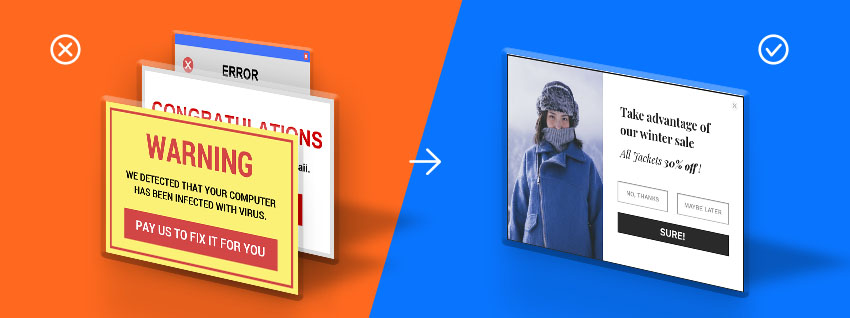
Depending on who you talk to, website popups are either a godsend for list building and subsequent revenue creation, or they’re a nuclear bomb for the user experience.

Some can’t stand popups and completely disregard sites that use them (or that’s what they say, at least). And there are even entire websites dedicated to hating on especially bad popups.

However, many marketers are fully charmed to their capabilities for revenue generation, lead collection, and driving attention and conversions in general.

It doesn’t have to be an either/or situation, though.

You can create website popups that aren’t detrimental to the user experience; In fact, if you do it really well, you can even improve the user experience with the right offer and presentation.

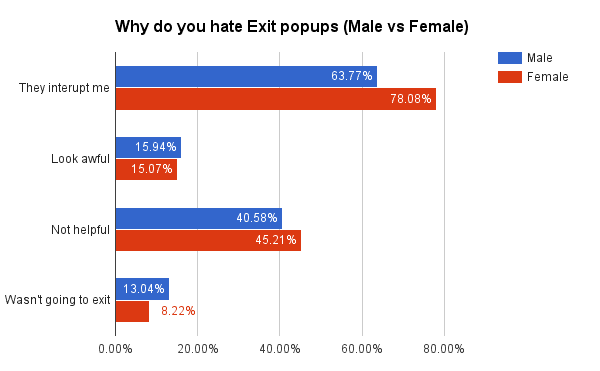
We all want to be companies that care a lot about our visitors and make the best popups possible, so it goes without saying, we care about timing, targeting, and triggering (i.e. who we send offers to, when we send them, and what those offers are). After all, the main reasons visitors get annoyed by popups are 1) when they disrupt the user experience and 2) when they offer no value or help:

Fortunately, you can easily solve for these things. In this article I’ll outline common website popup mistakes with real examples, and I’ll cover a few ways to remedy these mistakes.

Mistake 1: Poor timing

One of the biggest mistakes marketers make with website popups is with timing. It’s almost always the case that we trigger popups too soon (i.e. right away, no matter the context of the page or visitor).

On an Inbound.org discussion, Dustin J. Verburg had this to say:

“The most hilarious popups are the ones that say ‘LOVE THIS CONTENT? SUBSCRIBE FOR MORE’ because they assault my eyes before I even read two words of the article.

Now I guess I’ll never know if I love the content, because I close the tab immediately and never come back.”

Similar to Dustin, imagine you’re taking break from work to check out GrowthHackers. You find an article on the front page that looks interesting. You open it and immediately get this:

Woah, what’s this full screen takeover? I know this is common today, but most people are jarred by this experience.

Now you may not even remember what the article was, so you’re likely to click away and go back to actual work.

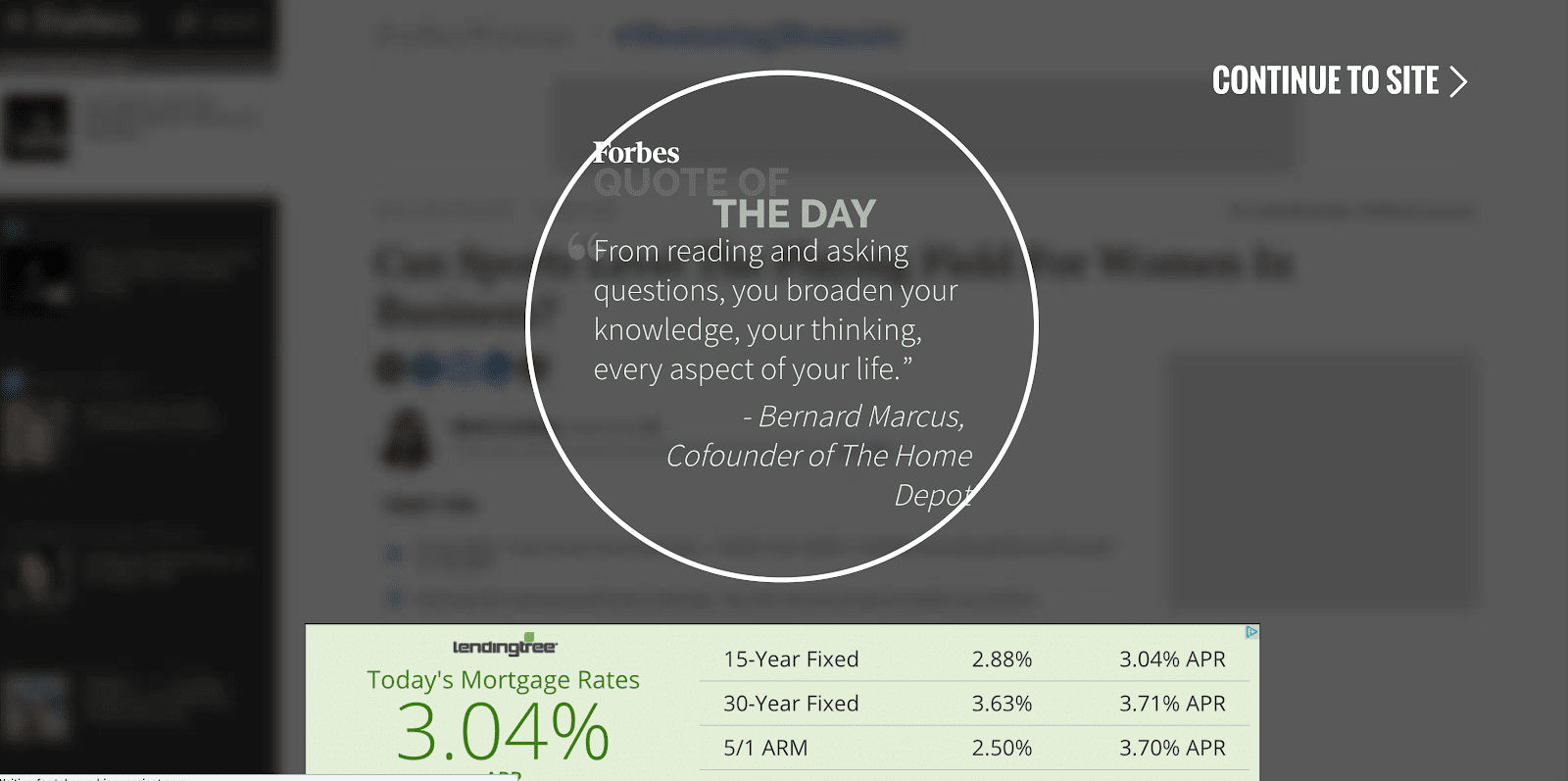
One possible way to remedy this – just spitballing here – could be to add some copy explaining that the visitor needs to click to continue on to the article. Forbes does this (though Forbes could never claim a good user experience without a good laugh):

At least you know where you’re at (the logo is prominent) and what to do (continue to site). But, it goes without saying, Forbes’ experience is not ideal so don’t copy it.

So how do you fix poor timing?

The best possible solution for user experience is to trigger a popup at a time that actually benefits a visitor. On a long-form blog article, this is usually at some point of strong user engagement, either measured by time on site or, better, by scroll-depth and content engagement.

You can do this with an on-scroll popup created in Unbounce.

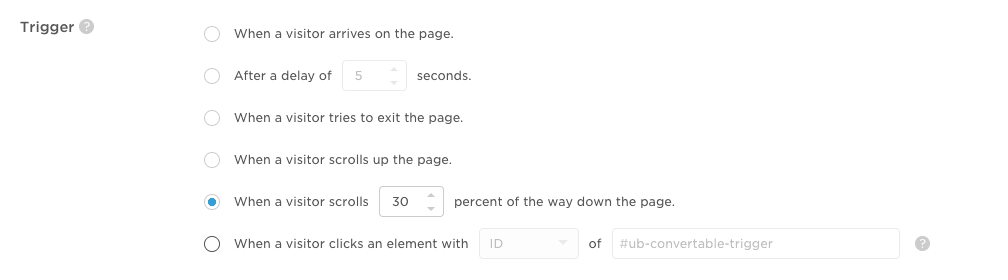
Once you’re happy with your design, simply set your trigger for when someone scrolls through a certain percentage of the page, or even after a delay you specify:

Click above for a larger, clearer image.

Overall, poor timing is a common problem, and it’s almost never intentional. We simply act hastily when setting up popups, or we spend all of our time crafting the offer and forget that when the offer is shown matters too.

I want to point out, however, that it’s not always a bad decision to throw a popup at visitors on arrival. It’s all about context.

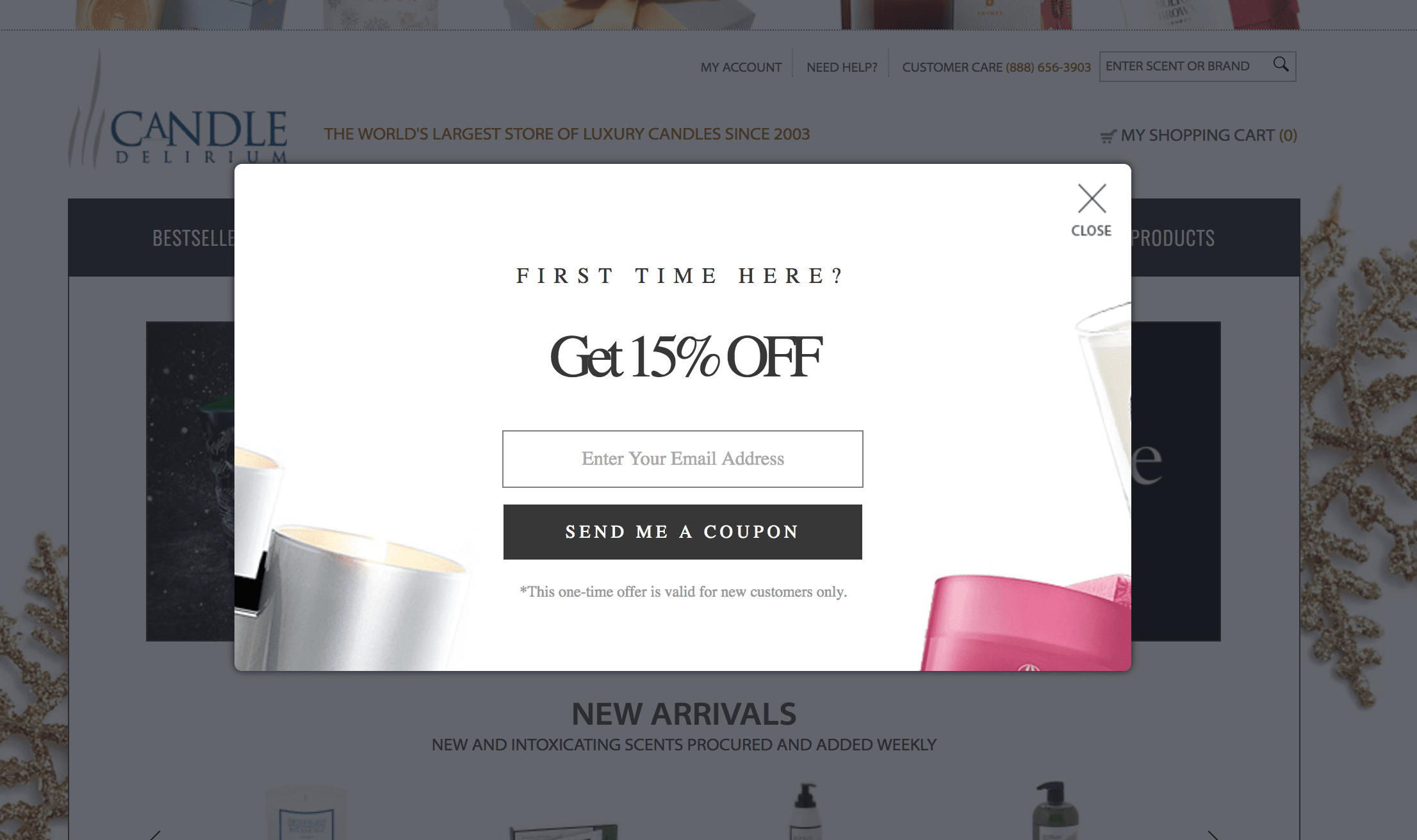
For example, if you’re shopping for clothes, there are a million options available. Therefore, it’s imperative for ecommerce shops to grab your attention as quickly as possible with an attractive offer. This is why you see so many website popups with discounts on arrival on ecommerce sites, like this one from Candle Delirium:

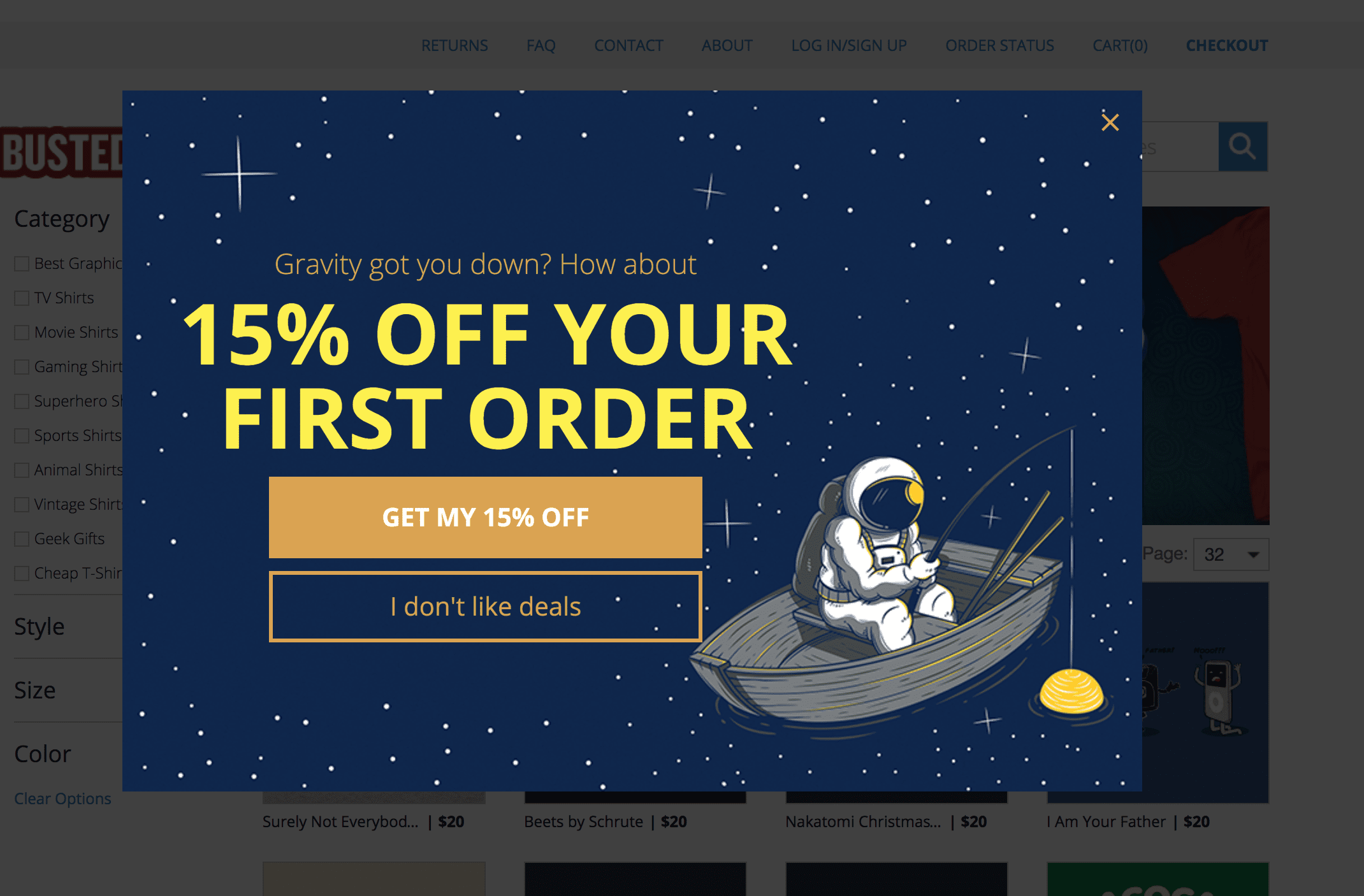
As well as this one from BustedTees:

It’s a very common tactic. We’ll go over it specifically in regard to ecommerce later in section three.

In general, it’s important to analyze a visitor’s behavior and trigger the popup at the exact moment (or as close to it as possible) that someone would want to subscribe/download your offer/etc. It’s a lot of work to tease out when this may be, but the analysis is worth it as you’ll annoy fewer visitors and convert more subscribers or leads.

Fix annoying timing: Consider the user experience. Does it warrant an on-arrival popup? If not, what’s the absolute ideal timing for a popup, based on user intent, behavior, and offer?

Mistake 2: Poor targeting

Poor targeting is a broad problem that’s usually made up of a mismatch between who you’re targeting and what offer you’re sending (though, you could also add in when you’re targeting them as a variable as well).

For instance, if you’re targeting a first time organic visitor to a blog post with a popup that announces a new product feature, you may spur some confusion. Rather, you should try to target based on appropriate user attributes, as well as within the context of where they are in the user journey. A better offer for a first time blog visitor might be an ebook or email course on a topic related to the blog post.

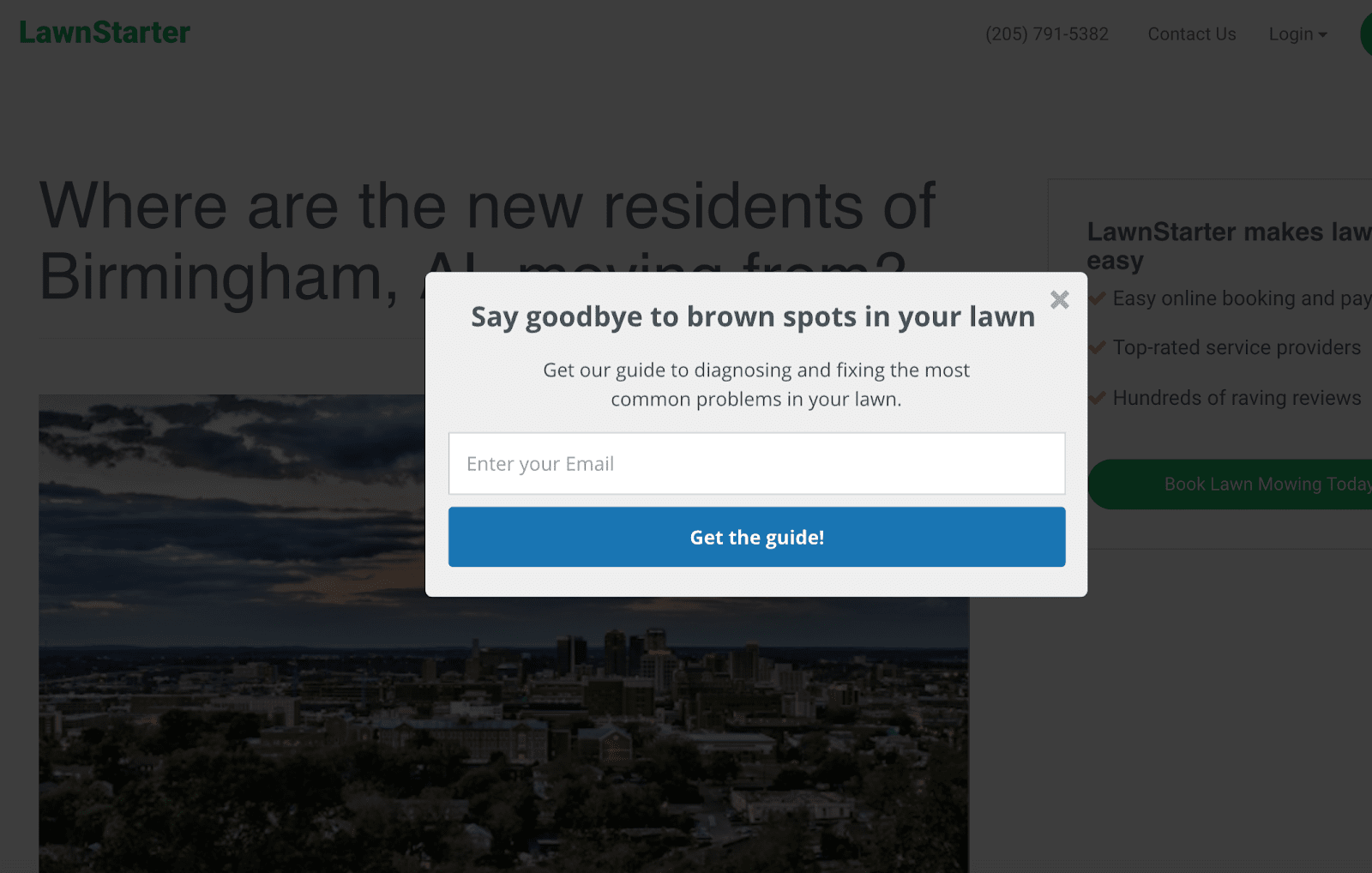
An example of poor targeting is LawnStarter’s guide on their post about where new residents of Birmingham are moving from. It’s a cool infographic-based guide they’re offering up, but the popup is really irrelevant to the content of the post someone’s currently reading in this case:

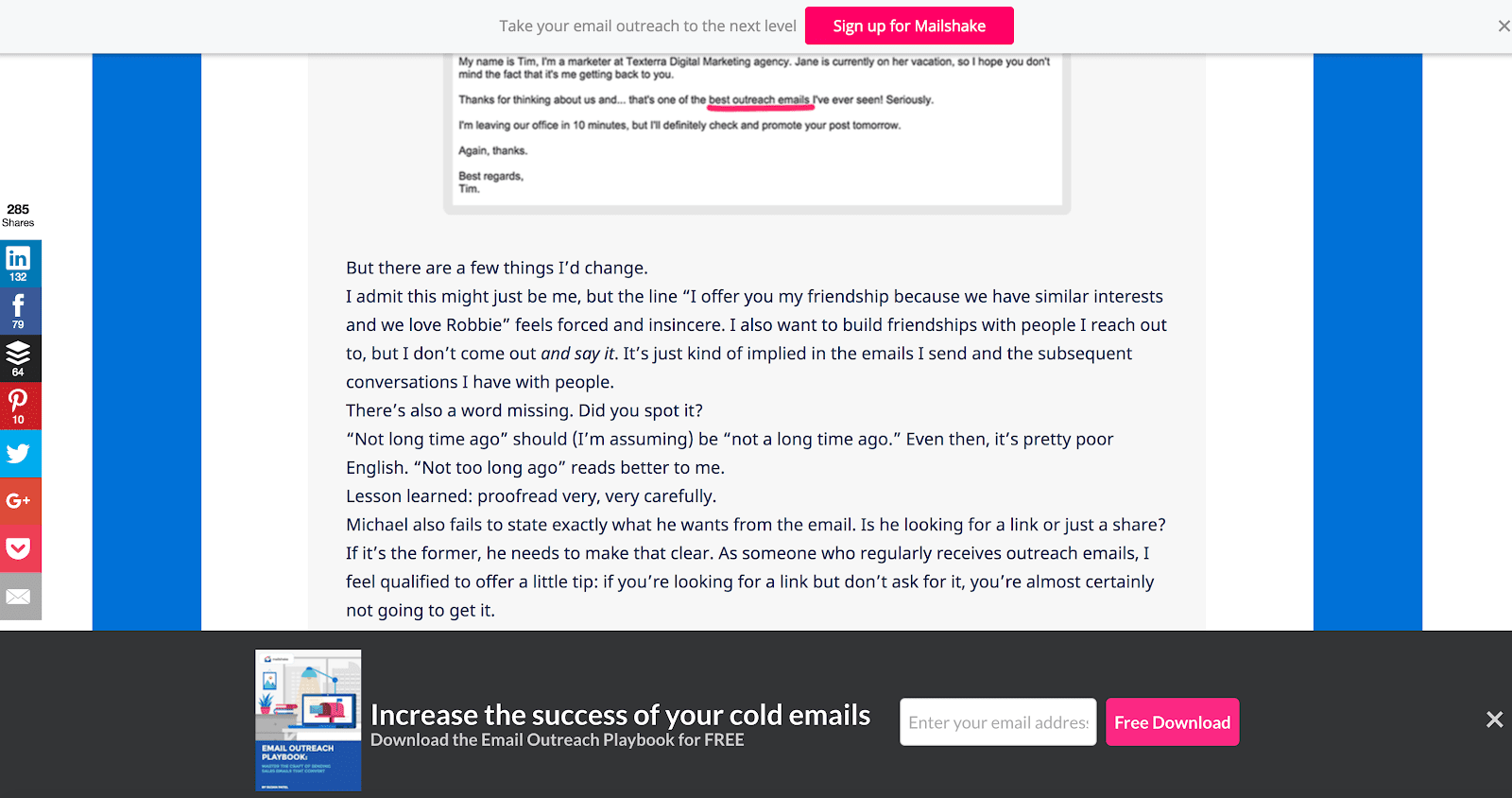
In another, better example, Mailshake has a massive guide on cold emailing, which would be a daunting read in a single session. It’s probably appropriate, then, that they offer the book up for download via a sticky bar at the bottom of a related article:

There are ways they could improve copy, design, or the offer itself, but the core point is that their targeting is spot on (i.e. after someone’s reading something about cold emailing, and offered up as added, downloadable value).

Now, if I already visited this page and downloaded the playbook, and they still hit me with this offer, then we’d have a targeting problem. They could use the fact that I’m a repeat visitor, as well as a subscriber already, to target me with a warmer offer, such as a deeper email course, a webinar, or possibly even a consultation/demo depending on their sales cycle and buyer’s journey.

The fix for poor targeting

Remember with targeting, you’re simply trying to align your offer with your visitor and where they are in their awareness and interest of your company and product.

This is where the value of progressive profiling comes in. But if you’re not doing that, at the very least you should be aligning the offers on your page with the intent of the traffic on that page.

You can also target offers based on URLs, location, referral source, and cookies. Really think about who is receiving your offer and at what point in the customer journey before you set a popup live.

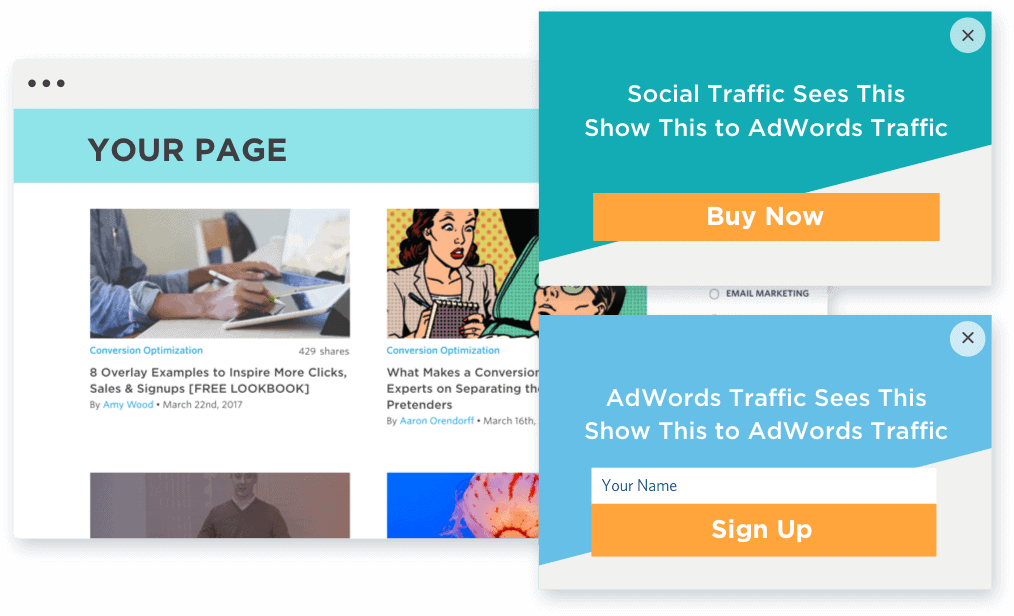
With popups created in Unbounce, for example, you can use referral source as a way to target appropriate offers to someone who’s come from social traffic, vs. someone who’s arrived via AdWords traffic:

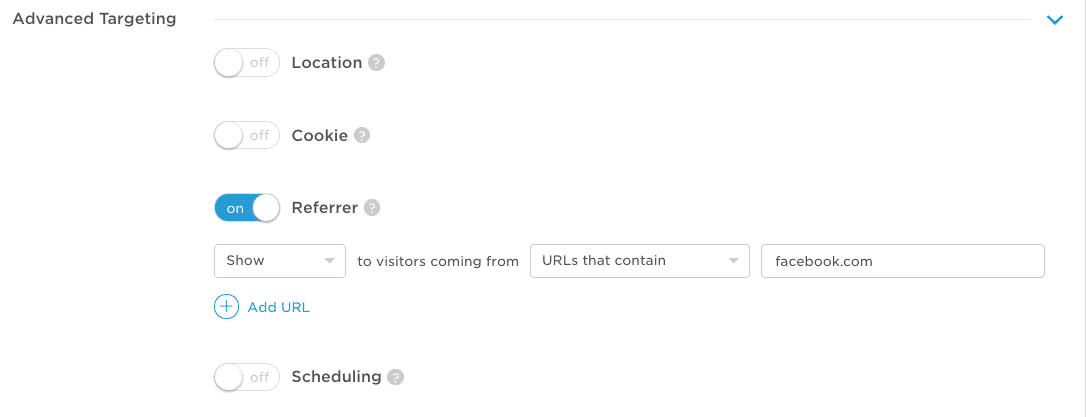
Simply create your popup, and in advanced targeting, select which referral sources you’d like to have access to the offer:

Fix targeting the wrong people at the wrong time with the wrong offer Analyze your customer journey and intent levels on content. Craft offers according to customer journey status as well as on-site user behavior.

Mistake 3: Offers with no obvious value

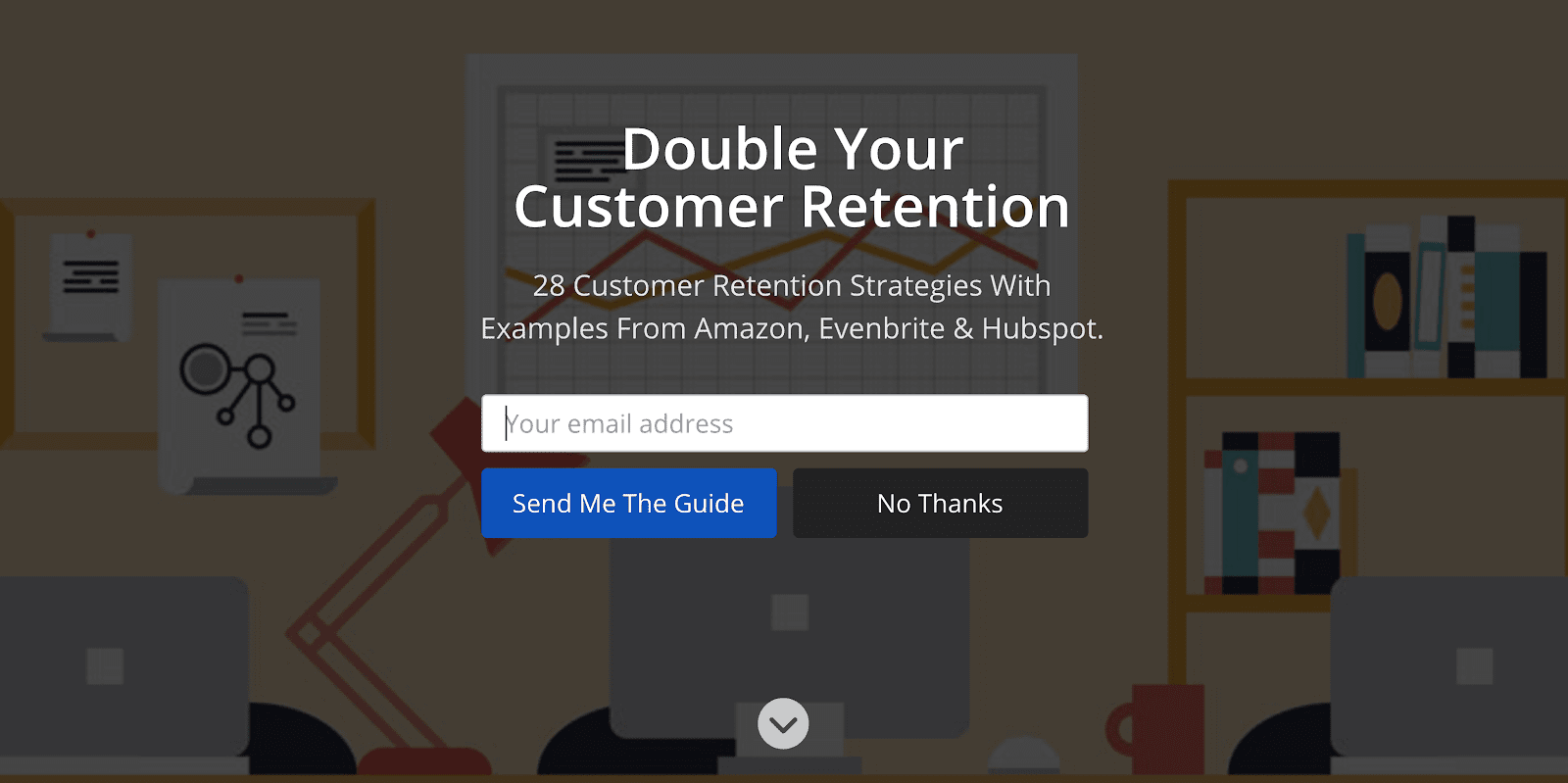
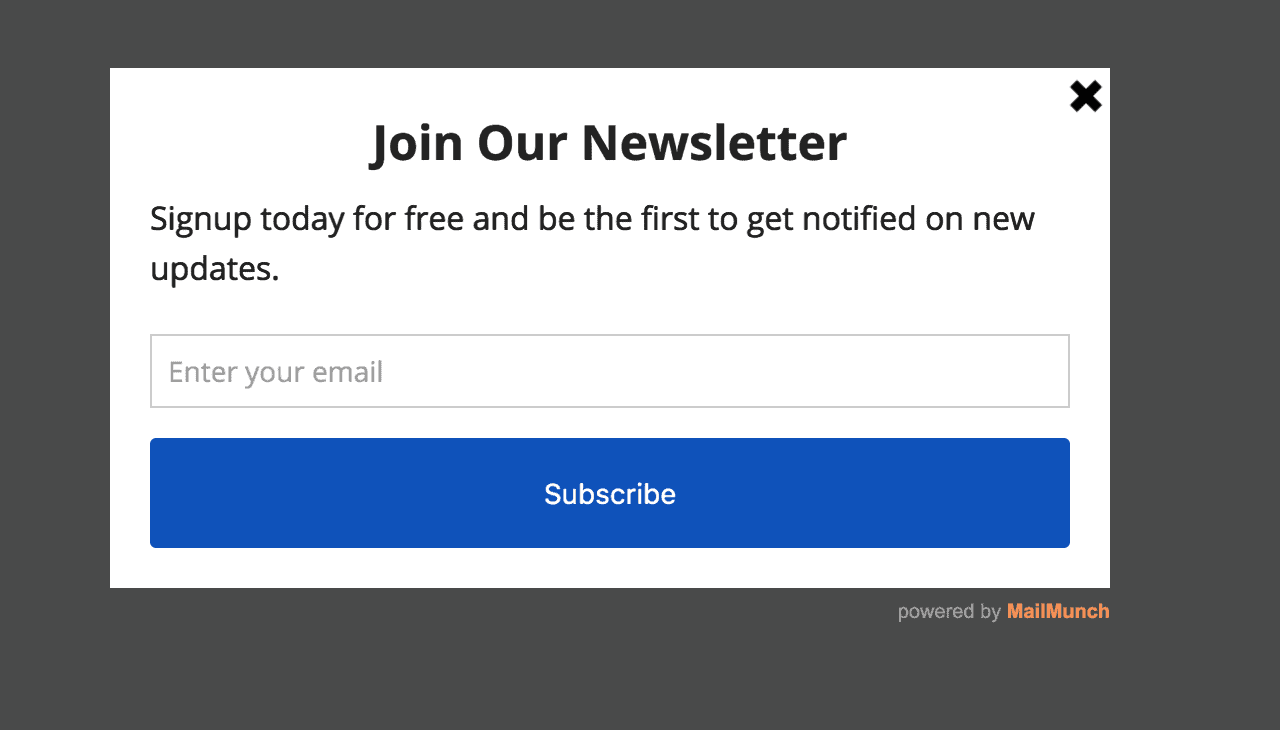
How many times have you been on a blog that simply wants you to sign up for a mailing list, no value promised or given? Like this:

If you’re an active reader of the blog, maybe this works. After all, you already know the value of the content and simply want to sign up for updates. Makes sense. But I’d wager this type of active reader is a small percentage of traffic, and these people will sign up however they can. Thereby the popup isn’t useful for everyone else.

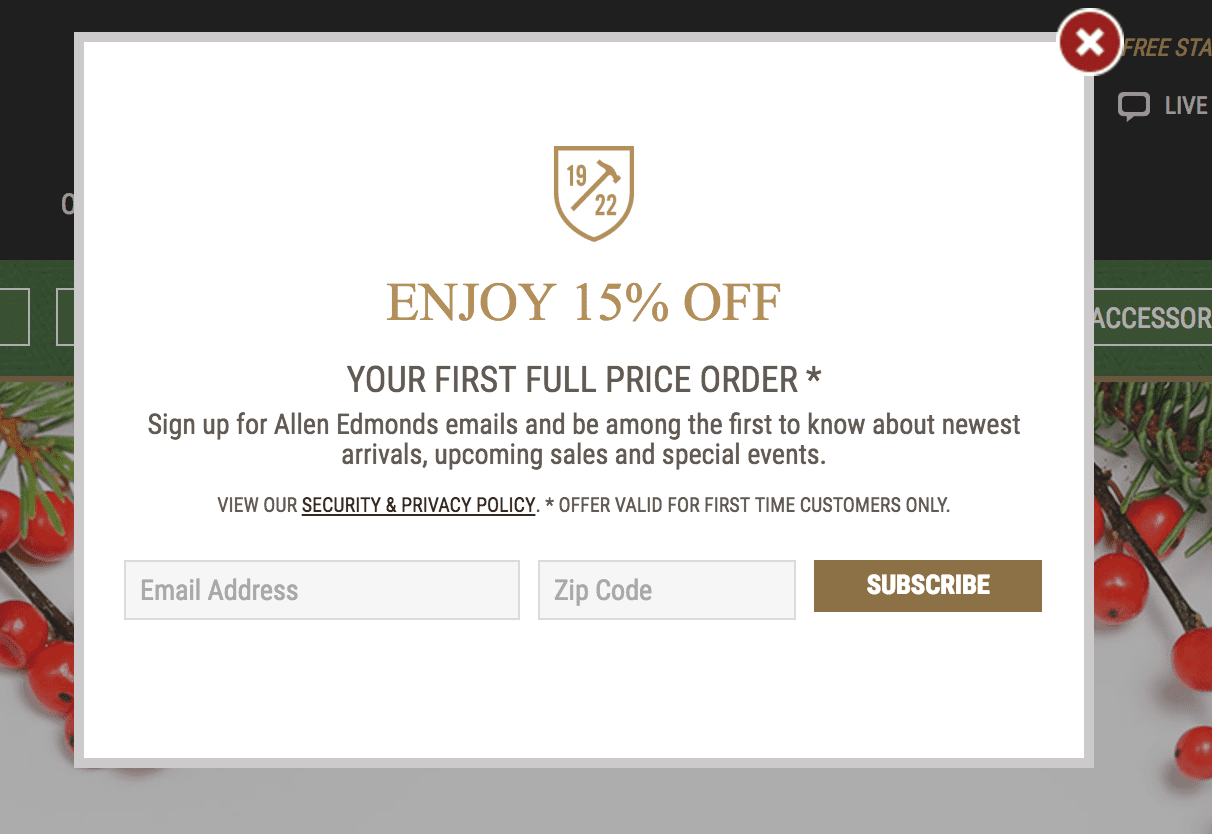
As we covered before, a much better way to capture attention is with a discount, like Allen Edmonds offers here as soon as I land on the site (on another note, this is a great use of an immediate triggering. It’s not an annoying popup when it delivers me a discount).

This is a super common ecommerce tactic.

It’s a competitive world out there, and giving an immediate hit in the form of a discount is a good way to capture some of that oh so valuable attention. It’s especially common when used on first time visitors to the homepage, as a homepage visitor’s experience is generally more variable and less intent-based (if they land on a product page from a search ad, it’s a bit of a different story).

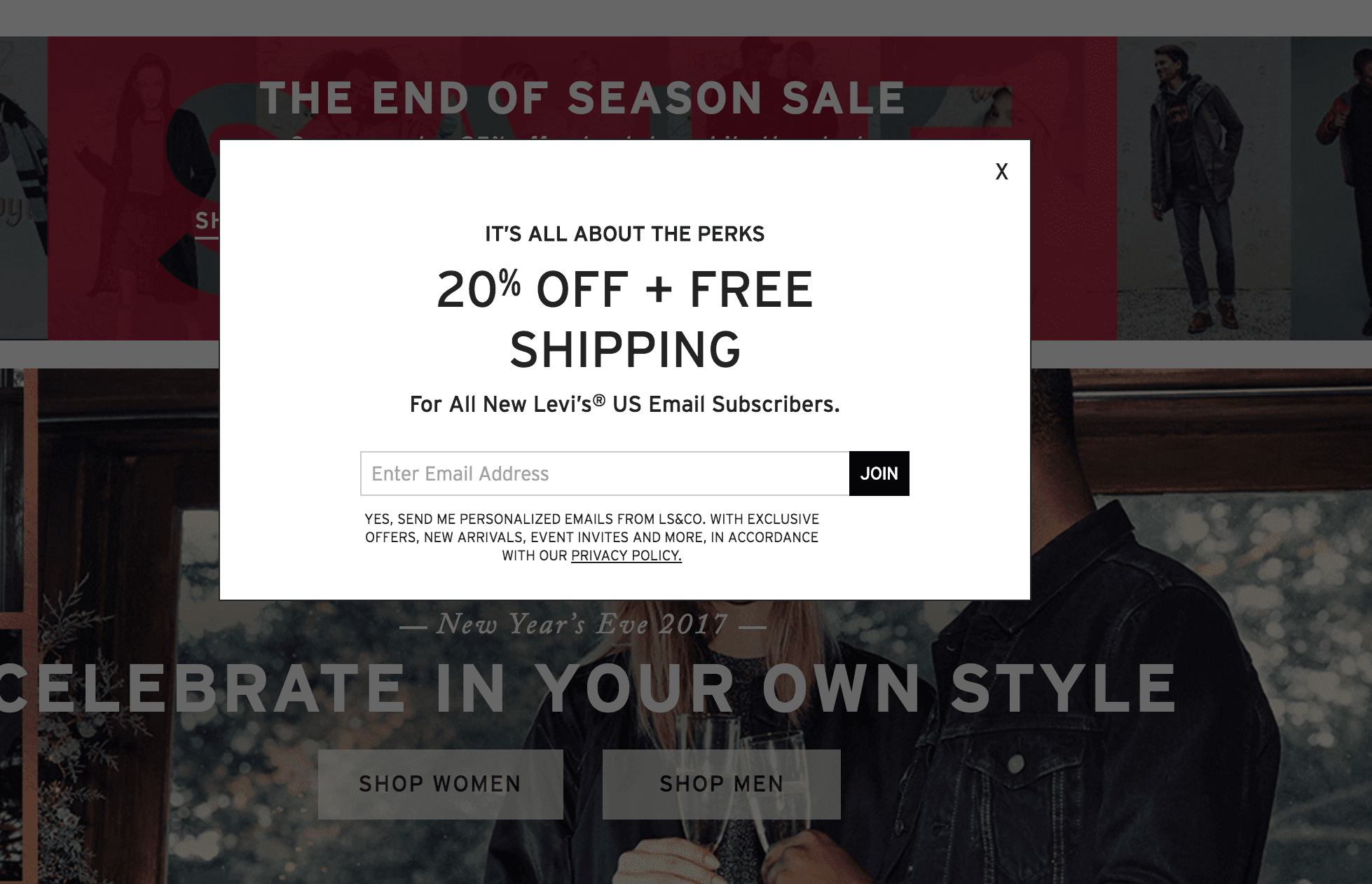
Here’s an example from Levi’s:

The fact that most ecommerce sites have similar messages nowadays is indicative of a creativity problem, one that presents itself to marketers in any industry. We look to competitors and to the consensus and think that we can’t fall behind, so we replicate tactics.

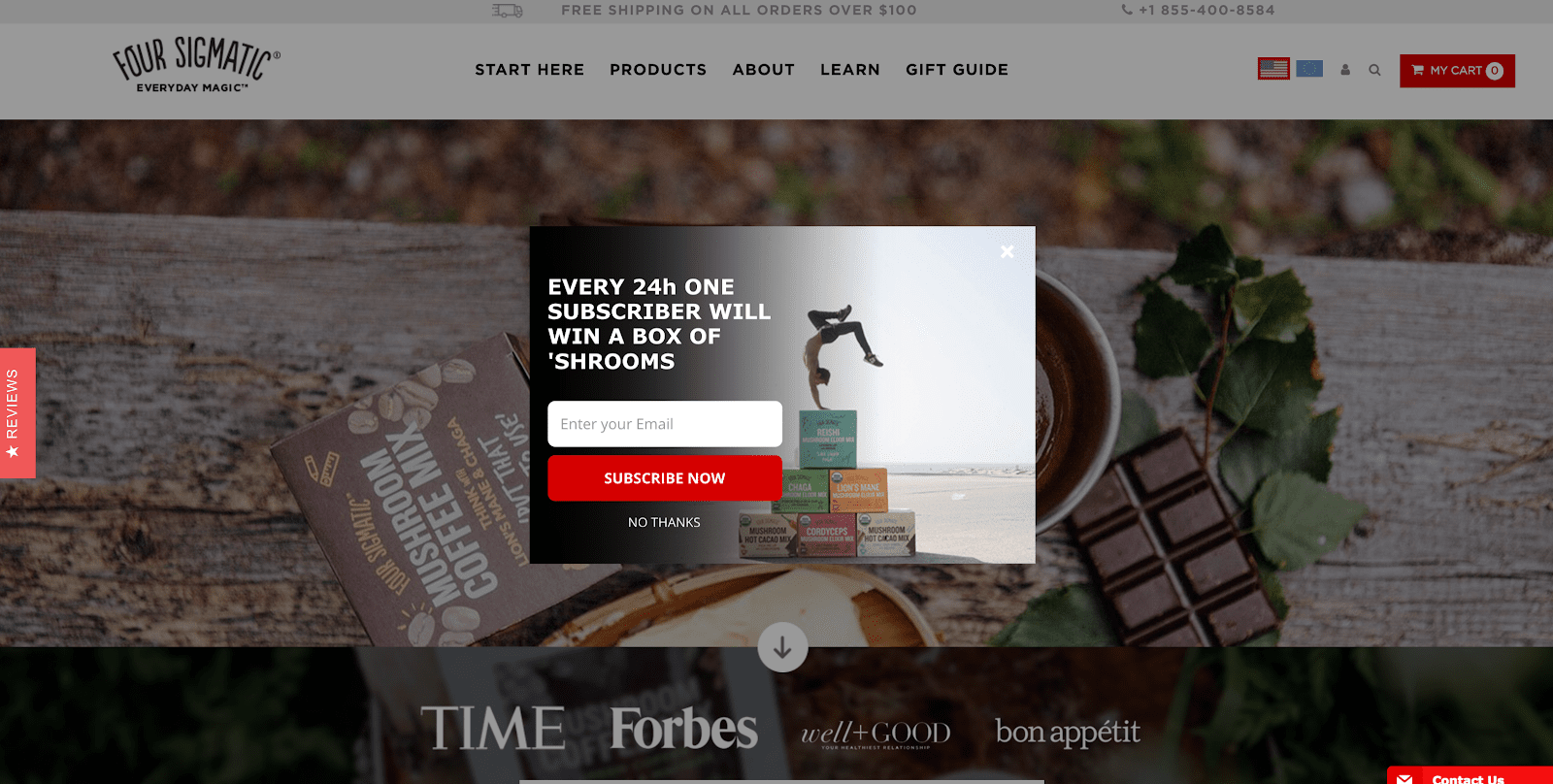
However, I’m more interested in sites, like Four Sigmatic, that push beyond and implement a creative offer, like their lottery style subscription featured below. (This is one of the only popups I’ve signed up for in months, by the way):

Offering up poor or no value is really the least forgivable mistake if you’re a marketer. Crafting offers that align to your buyer persona is your job. Also, it’s fun. If you have a bland offer, this could easily be the biggest opportunity for lifting conversions, as well as improving the user experience (no one is complaining about awesome offers).

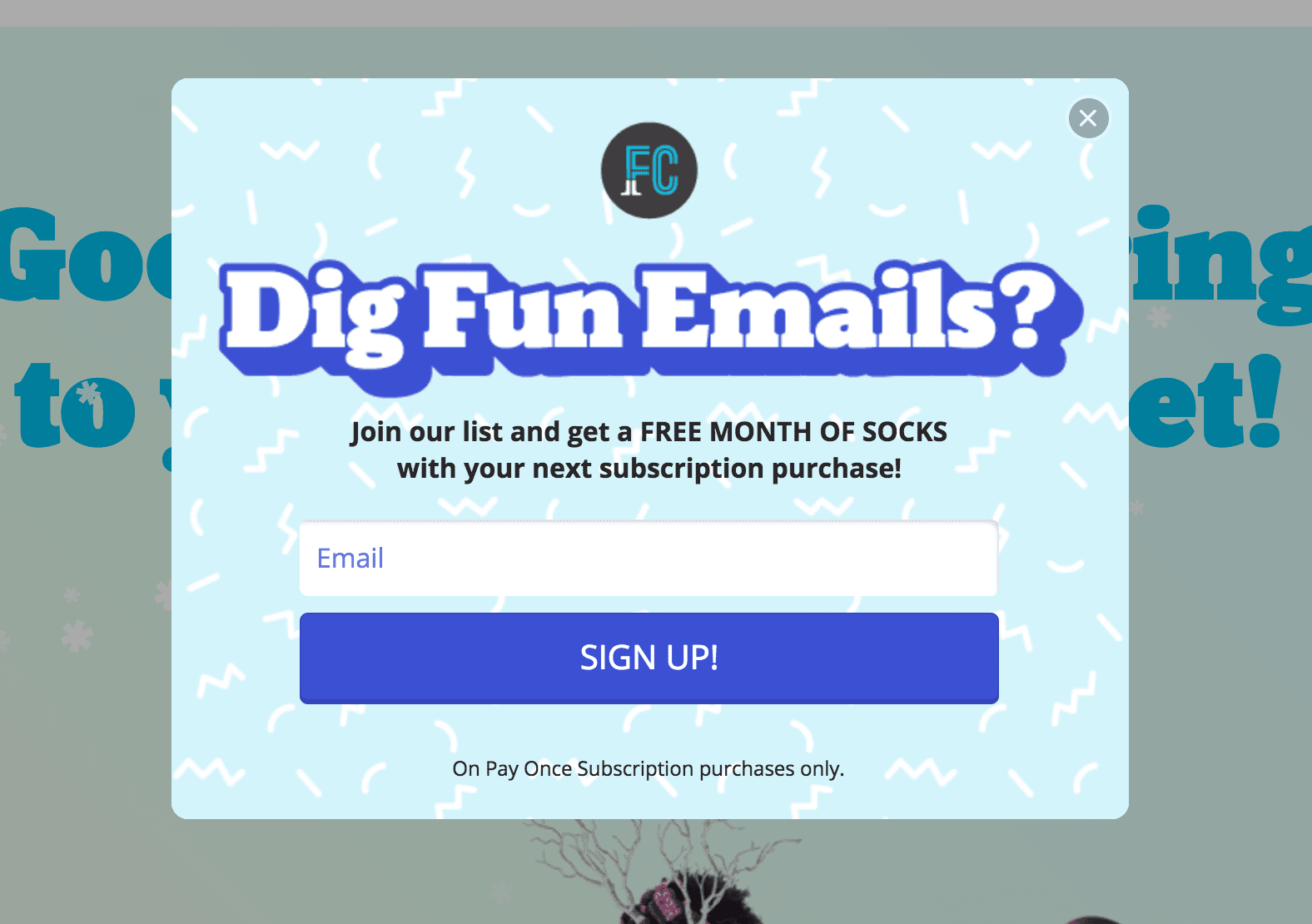
Foot Cardigan does a really good job of offering value and conveying it in a fun way too:

Triggering popups with zero value? Think about ways you can give massive value to your site visitors, so much that they really want to give you their email, and create an offer for this.

Mistake 4: Poor design

If you use Unbounce Popups, it’s almost hard to create an ugly one. Still though, the internet is filled with eye-sore examples:

Design matters. A poorly designed website element can throw off your whole brand perception, which is important in creating trust, value, and in easing friction.

As Ott Niggulis put it in a ConversionXL article:

“Success in business online is all down to trust. You either see something that makes you trust a vendor or you don’t. Trust is also directly linked to conversions – if people leave your website because it’s so badly designed that it makes you seem untrustworthy then you’re missing out on lost prospects, customers, sales, and profits.

Good design = trust = more conversions = more money in your pocket. It’s as easy as that.”

That same article cites a study where 15 participants were directed to Google health information that was relevant to them, then they were asked about their first impressions of the sites.

Out of all the factors mentioned for distrusting a website, 94% were design related. Crazy!

So don’t just put up a poorly designed popup thinking the message will be the focus. Put some effort into it.

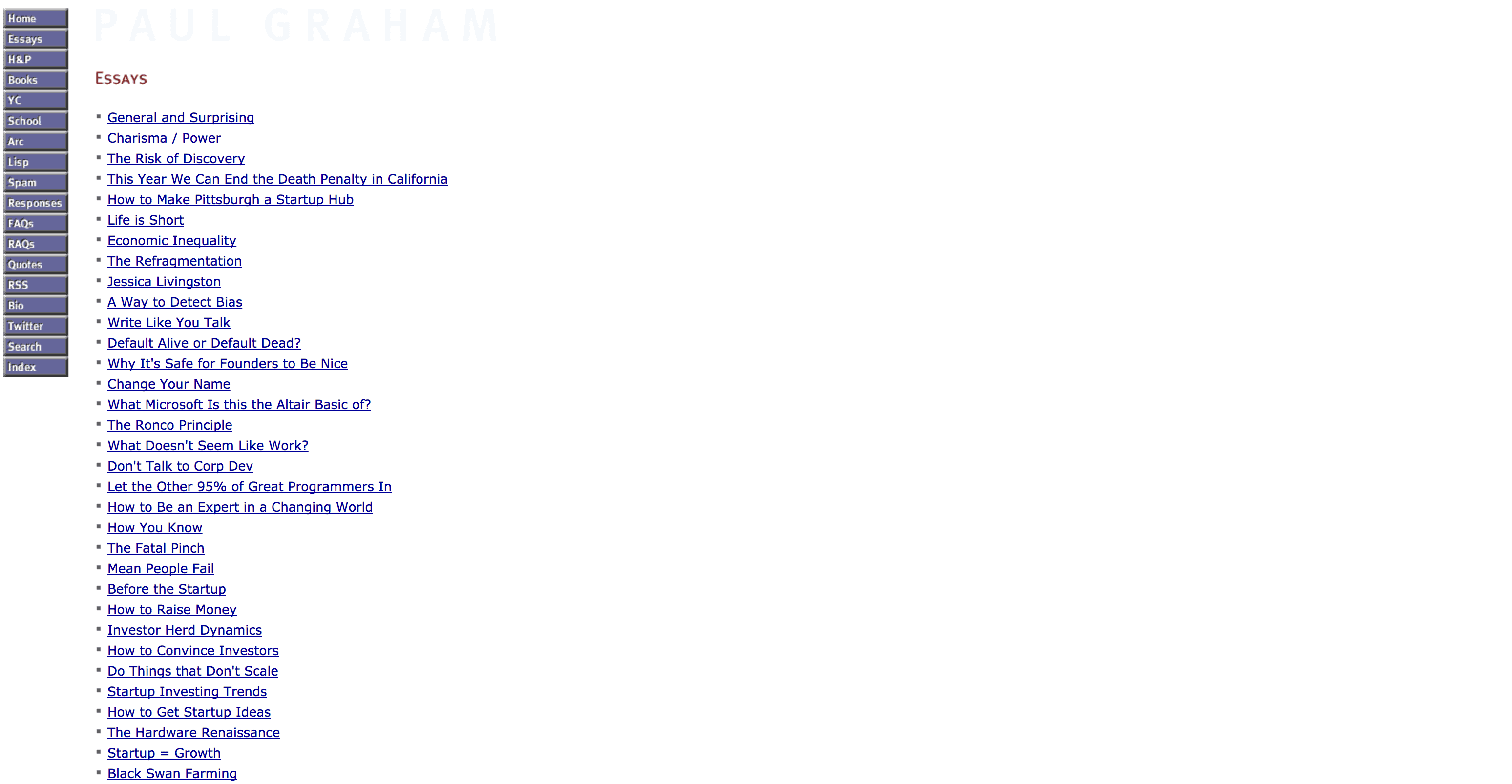
Of course, you don’t always need to look like a luxury brand. If cheap spartan is your schtick, then it can work for you. After all, Paul Graham’s site isn’t pretty but it’s so, so valuable:

Image of Paul Graham’s site.

As Aurora Bedford from NN/g explains it, it’s more about matching design to your brand values and objectives:

“The most important thing to remember is that the initial perception of the site must actually match the business — not every website needs to strive to create a perception of luxury and sophistication, as what is valuable to one user may be at complete odds with another.”

No matter what your brand positioning may be, however, make sure you clean up obvious design mistakes before hitting publish.

Fix up bad design: Spend a few hours longer designing your popup, hire a designer, or use a tool like Unbounce with a template.

Mistake 5: Poor Copy

Presenting your offers with clear copy is huge. Most copywriting, not just on popups but online in general, is:

  • Boring
  • Vague
  • Confusing
  • Cringe-inducing

…in that order, I’d wager. Not often do you find crisp, clear, and compelling copy (unless it was whipped up by a professional, of course).

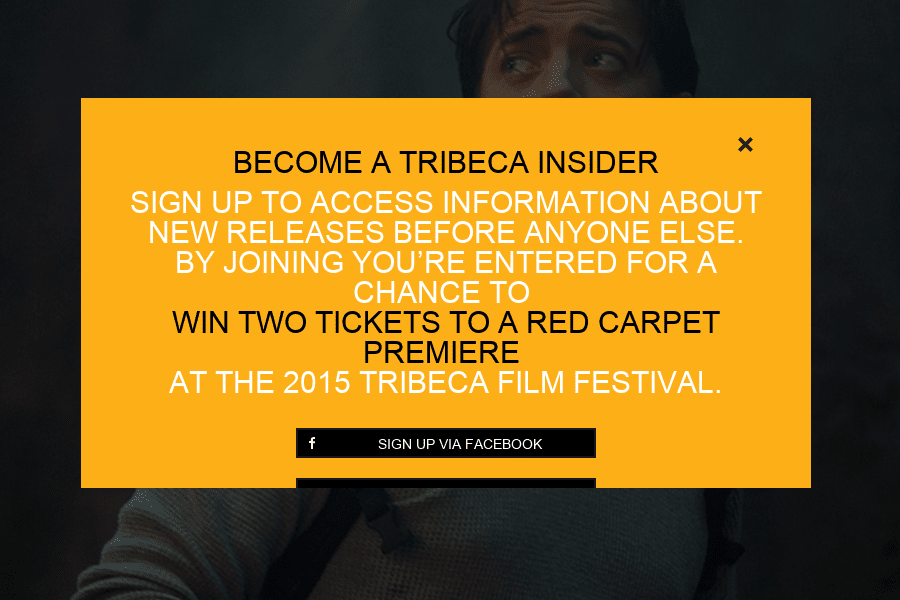
As with the example below, you’re more likely to find copy that’s vague (how many ebooks, which ones, etc.) and cringe-inducing (Rocking with a capital R is pretty goofy):

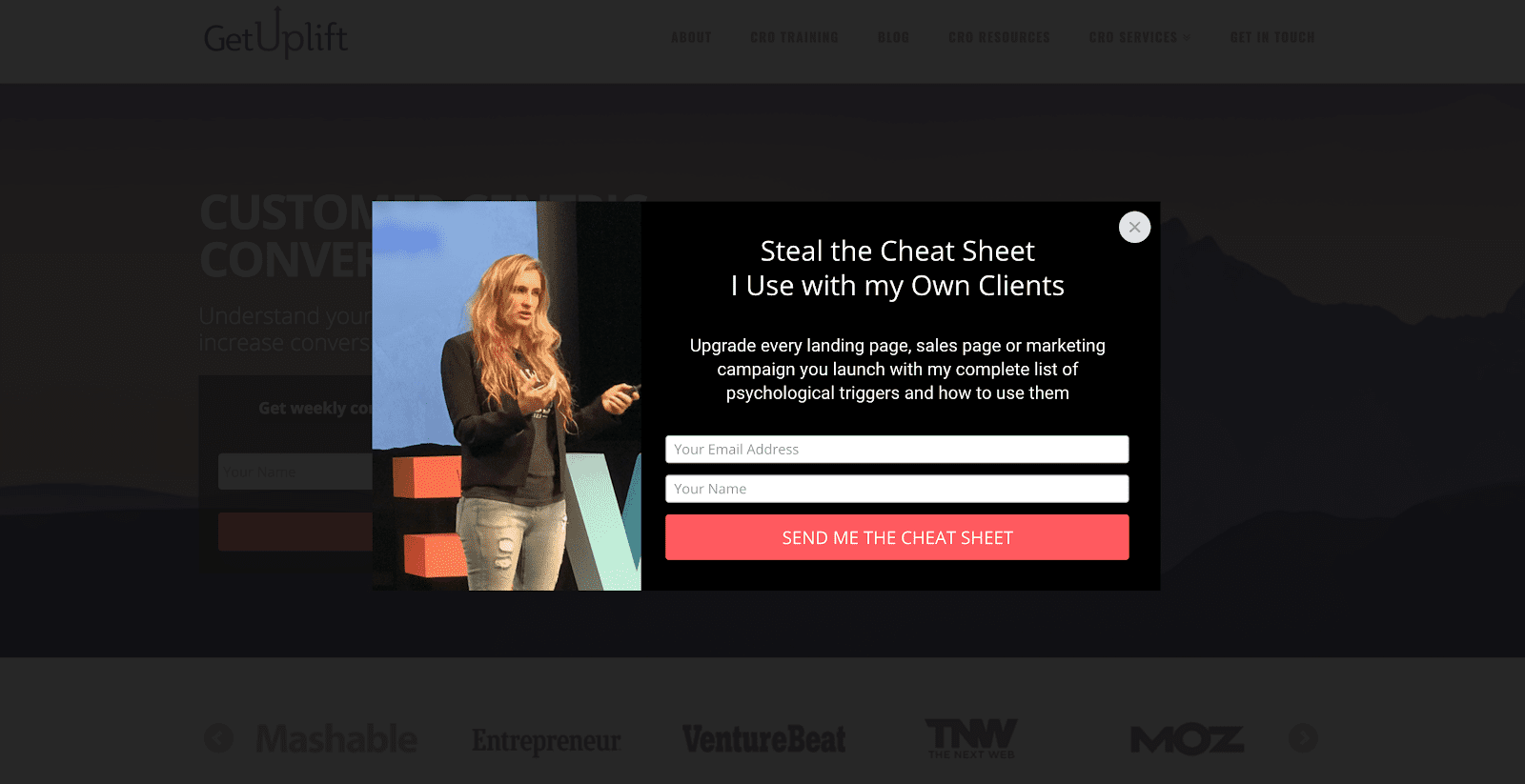
The copy you write for your popup may be the most effective mechanism you have for converting visitors (outside of the targeting rules). Here’s how Talia Wolf, founder of GetUplift, put it in an Inbound.org comment:

“Many people are trying to capture your customer’s attention too so you need to give them a good reason for subscribing/not leaving.

It’s not enough to talk about yourself, you need to address the customer’s needs: one way is by highlighting the value your customer gains. The other, highlighting what they might lose. (Example: “Join thousands of happy customers” vs. “Don’t lose this unique content we’re giving our subscribers only”

Her website has a solid example of a popup with great copywriting, by the way:

Sometimes, all you need to do is pull your message to the top and make it prominent. Often we try to write clever copy instead of clear copy, but clear always beats clever.

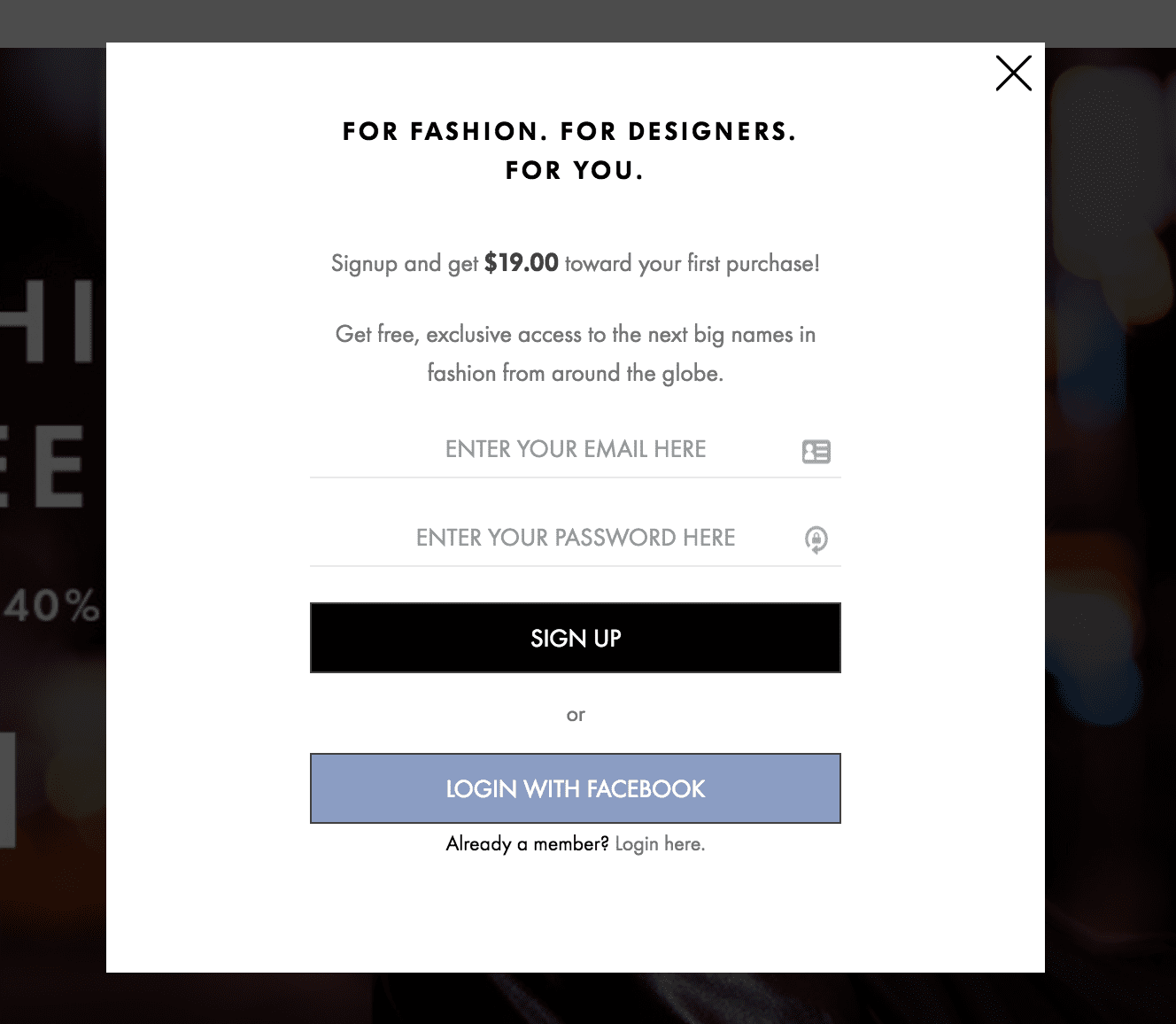
For example, if the following popup led with the money offered for the account, it’d probably be more compelling than their current vague headline:

Mistake 6: Overload

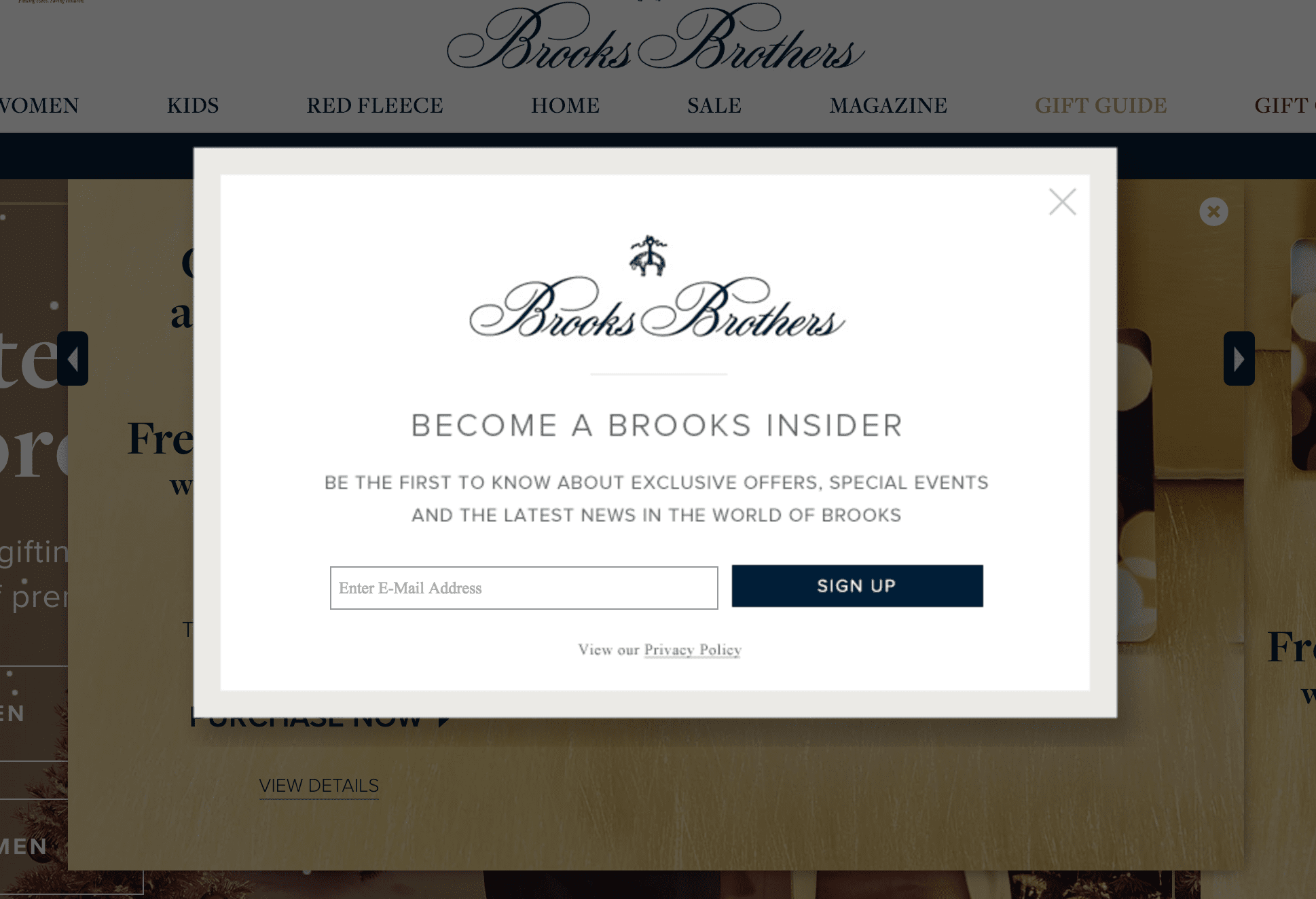
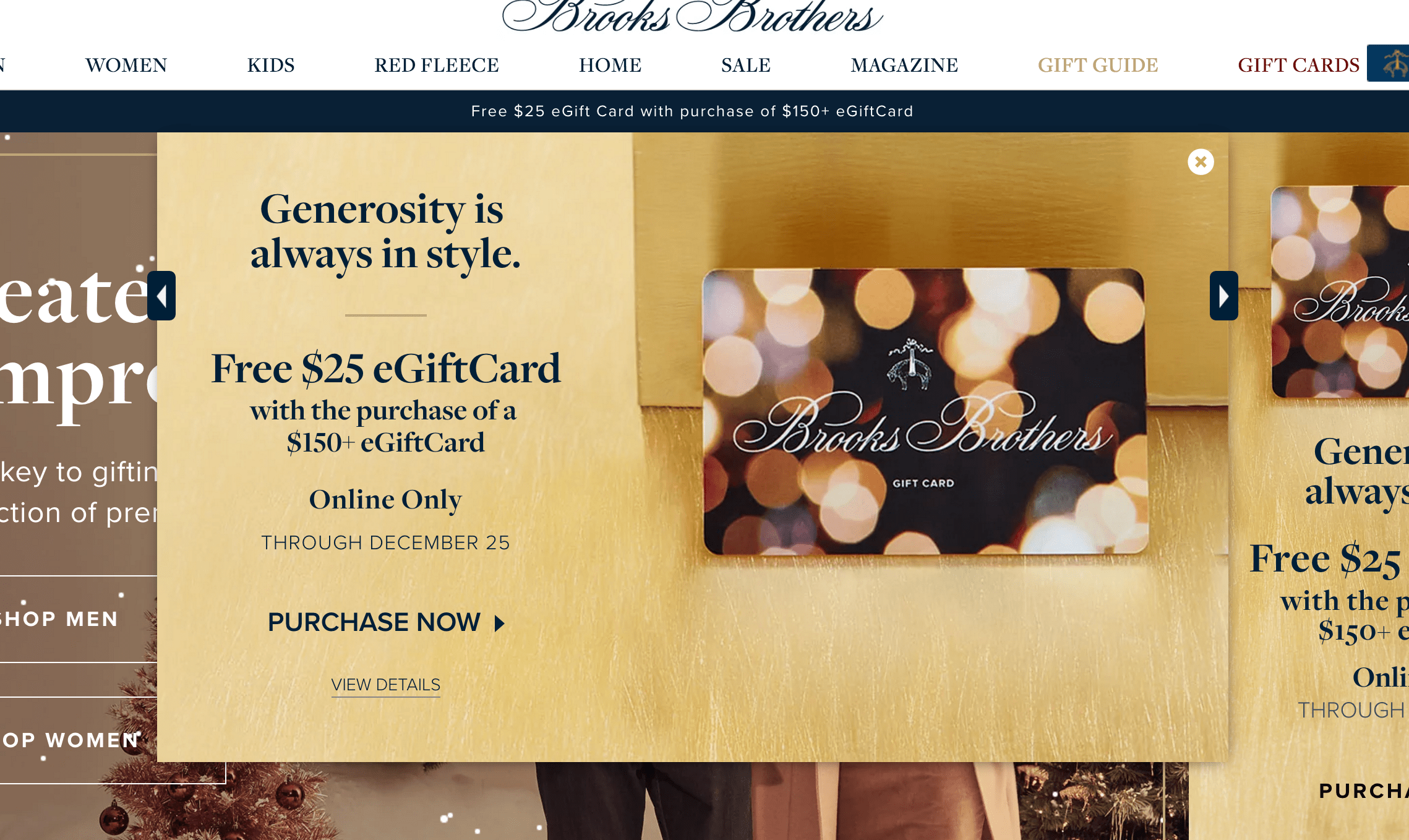
Sometimes websites can get pretty aggressive. Here’s an experience I ran into on Brooks Brothers’ website:

One (pretty value-less) popup that I click out of, only to be followed by another one:

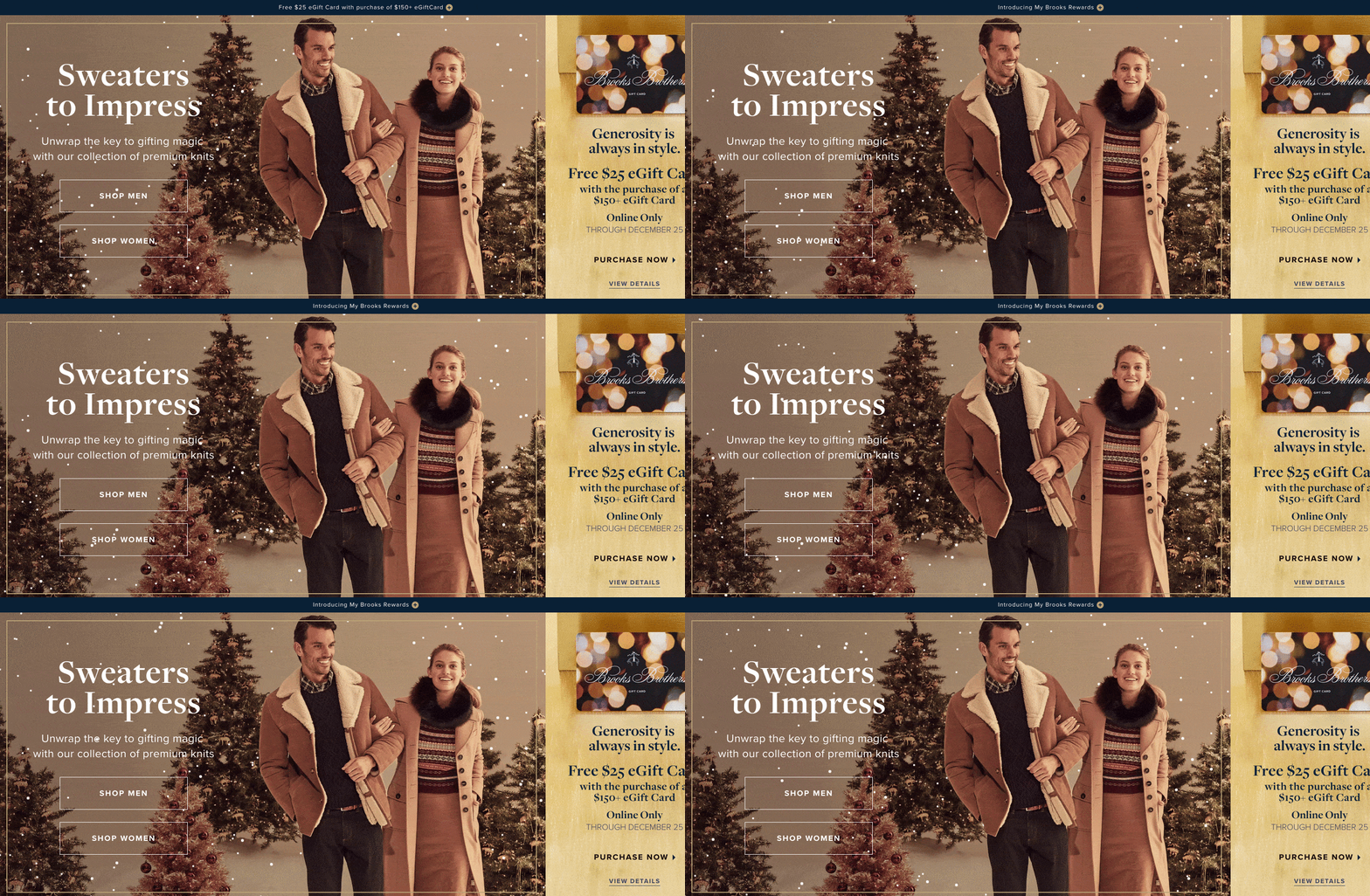
Now, there’s just a lot of clutter going on here. Different colors, different offers, different banners. As a first time visitor, I’m not sure what’s going on. Plus, they have animated snowfall, which adds to the clutter.

This is quite extreme, but it’s not uncommon for marketers to see some results with a popup and go overboard, triggering two, three, even four in a single session. When all of this occurs within 10 seconds of being on the site, things get annoying quickly.

Take down too many popups: Simplify and strategically target any popups on your site. They shouldn’t appear everywhere for everyone, your targeting is key.

The lesson

Popups don’t need to be annoying. Rather, they can actually add to the user experience if you put a little time and effort into analysis and creative targeting and triggering.

If you avoid the mistakes here, not only will your popups be less likely to feel intrusive, but they’ll convert better and they’ll convert the types of subscribers and leads you actually want.

Run a popup experiment of your own See Unbounce templates you can get up and running today.
Unbounce

MozCon 2018: The Initial Agenda

Posted by Trevor-Klein

With just over three months until MozCon 2018, we"re getting a great picture of what this year"s show will be like, and we can"t wait to share some of the details with you today.

We"ve got 21 speakers lined up (and will be launching our Community Speaker process soon — stay tuned for more details on how to make your pitch!). You"ll see some familiar faces, and some who"ll be on the MozCon stage for the first time, with topics ranging from the evolution of searcher intent to the increasing importance of local SEO, and from navigating bureaucracy for buy-in to cutting the noise out of your reporting.

Topic details and the final agenda are still in the works, but we"re excited enough about the conversations we"ve had with speakers that we wanted to give you a sneak peek. We hope to see you in Seattle this July 9–11!

If you still need your tickets, we"ve got you covered:

Pick up your ticket to MozCon!

The Speakers

Here"s a look at who you"ll see on stage this year, along with some of the topics we"ve already worked out:


Jono Alderson

Mad Scientist, Yoast

The Democratization of SEO

Jono will explore how much time and money we collectively burn by fixing the same kinds of basic, "binary," well-defined things over and over again (e.g., meta tags, 404s, URLs, etc), when we could be teaching others throughout our organizations not to break them in the first place.

As long as we "own" technical SEO, there"s no reason (for example) for the average developer to learn it or care — so they keep making the same mistakes. We proclaim that others are doing things wrong, but by doing so we only reinforce the line between our skills and theirs.

We need to start giving away bits of the SEO discipline, and technical SEO is probably the easiest thing for us to stop owning.

In his talk, he"ll push for more democratization, education, collaboration, and investment in open source projects so we can fix things once, rather than a million times.


Stephanie Briggs

Partner, Briggsby

Search-Driven Content Strategy

Google"s improvements in understanding language and search intent have changed how and why content ranks. As a result, many SEOs are chasing rankings that Google has already decided are hopeless.

Stephanie will cover how this should impact the way you write and optimize content for search, and will help you identify the right content opportunities. She"ll teach you how to persuade organizations to invest in content, and will share examples of strategies and tactics she has used to grow content programs by millions of visits.


Rob Bucci

CEO, STAT Search Analytics

"Near me" or Far:
How Google May Be Deciding Your Local Intent for You

In August 2017, Google stated that local searches without the "near me" modifier had grown by 150% and that searchers were beginning to drop geo-modifiers — like zip code and neighborhood — from local queries altogether. But does Google still know what searchers are after?

For example: the query [best breakfast places] suggests that quality takes top priority; [breakfast places near me] indicates that close proximity is essential; and [breakfast places in Seattle] seems to cast a city-wide net; while [breakfast places] is largely ambiguous.

By comparing non-geo-modified keywords against those modified with the prepositional phrases "near me" and "in [city name]" and qualifiers like “best,” we hope to understand how Google interprets different levels of local intent and uncover patterns in the types of SERPs produced.

With a better understanding of how local SERPs behave, SEOs can refine keyword lists, tailor content, and build targeted campaigns accordingly.


Neil Crist

VP of Product, Moz

The Local Sweet Spot: Automation Isn"t Enough

Some practitioners of local SEO swear by manual curation, claiming that automation skips over the most important parts. Some swear the exact opposite. The real answer, especially when you"re working at enterprise scale, is a sweet spot in the middle.

In this talk, Neil will show you where that spot is, why different verticals require different work, and some original research that reveals which of those verticals are most stable.


Dana DiTomaso

President and Partner, Kick Point

Traffic vs. Signal

With an ever-increasing slate of options in tools like Google Tag Manager and Google Data Studio, marketers of all stripes are falling prey to the habit of "I"ll collect this data because maybe I"ll need it eventually," when in reality it"s creating a lot of noise for zero signal.

We"re still approaching our metrics from the organization"s perspective, and not from the customer"s perspective. Why, for example, are we not reporting on (or even thinking about, really) how quickly a customer can do what they need to do? Why are we still fixated on pageviews? In this talk, Dana will focus our attention on what really matters.


Rand Fishkin

Founder, SparkToro, Moz, & Inbound.org

A man who needs no introduction to MozCon, we"re thrilled to announce that Rand will be back on stage this year after founding his new company, SparkToro. Topic development for his talk is in the works; check back for more information!


Oli Gardner

Co-Founder, Unbounce

Content Marketing Is Broken and Only Your M.O.M. Can Save You

Traditional content marketing focuses on educational value at the expense of product value, which is a broken and outdated way of thinking. We all need to sell a product, and our visitors all need a product to improve their lives, but we"re so afraid of being seen as salesy that somehow we got lost, and we forgot why our content even exists.

We need our M.O.M.s!

No, he isn"t talking about your actual mother. He"s talking about your Marketing Optimization Map — your guide to exploring the nuances of optimized content marketing through a product-focused lens.

In this session you"ll learn:

  • Data and lessons learned from his biggest ever content marketing experiment, and how those lessons have changed his approach to content
  • A context-to-content-to-conversion strategy for big content that converts
  • Advanced methods for creating "choose your own adventure" navigational experiences to build event-based behavioral profiles of your visitors (using GTM and GA)
  • Innovative ways to productize and market the technology you already have, with use cases your customers had never considered

Casie Gillette

Senior Director, Digital Marketing, KoMarketing

The Problem with Content & Other Things We Don"t Want to Admit

Everyone thinks they need content but they don"t think about why they need it or what they actually need to create. As a result, we are overwhelmed with poor quality content and marketers are struggling to prove the value.

In this session, we"ll look at some of the key challenges facing marketers today and how a data-driven strategy can help us make better decisions.


Emily Grossman

Mobile Product Marketer & App Strategist

What All Marketers Can Do about Site Speed

At this point, we should all have some idea of how important site speed is to our performance in search. The recently announced "speed update" underscored that fact yet again. It isn"t always easy for marketers to know where to start improving their site"s speed, though, and a lot of folks mistakenly believe that site speed should only be a developer"s problem. Emily will clear that up with an actionable tour of just how much impact our own work can have on getting our sites to load quickly enough for today"s standards.


Russ Jones

Principal Search Scientist, Moz

Lies, Damn Lies, and Statistics

Russ is our principal search scientist here at Moz. After a decade as CTO of an agency, he joined Moz to focus on what he"s most interested in: research and development, primarily related to keyword and link data. He"s responsible for many of our most forward-looking techniques.

At MozCon this year, he"s looking to focus on cutting through bad metrics with far better metrics, exploring the hidden assumptions and errors in things our industry regularly reports, showing us all how we can paint a more accurate picture of what"s going on.


Justine Jordan

VP Marketing, Litmus

A veteran of the MozCon stage, Justine is obsessed with helping marketers create, test, and send better email. Named an Email Marketer Thought Leader of the Year, she is strangely passionate about email marketing, hates being called a spammer, and still gets nervous when pressing send.

At MozCon this year, she"s looking to cover the importance of engagement with emails in today"s world of marketing. With the upcoming arrival of GDPR and the ease with which you can unsubscribe and report spam, it"s more important than ever to treat people like people instead of just leads.


Michael King

Managing Director, iPullRank

You Don"t Know SEO

Or maybe, "SEO you don"t know you don"t know." We"ve all heard people throw jargon around in an effort to sound smart when they clearly don"t know what it means, and our industry of SEO is no exception. There are aspects of search that are acknowledged as important, but seldom actually understood. Mike will save us from awkward moments, taking complex topics like the esoteric components of information retrieval and log-file analysis, pairing them with a detailed understanding of technical implementation of common SEO recommendations, and transforming them into tools and insights we wish we"d never neglected.


Cindy Krum

CEO & Founder, MobileMoxie

Mobile-First Indexing or a Whole New Google

The emergence of voice-search and Google Assistant is forcing Google to change its model in search, to favor their own entity understanding or the world, so that questions and queries can be answered in context. Many marketers are struggling to understand how their website and their job as an SEO or SEM will change, as searches focus more on entity-understanding, context and action-oriented interaction. This shift can either provide massive opportunities, or create massive threats to your company and your job — the main determining factor is how you choose to prepare for the change.


Dr. Pete Meyers

Marketing Scientist, Moz

Dr. Peter J. Meyers (AKA "Dr. Pete") is a Marketing Scientist for Seattle-based Moz, where he works with the marketing and data science teams on product research and data-driven content. Guarding the thin line between marketing and data science — which is more like a hallway and pretty wide — he"s the architect behind MozCast, the keeper of the Algo History, and watcher of all things Google.


Britney Muller

Senior SEO Scientist, Moz

Britney is Moz"s senior SEO scientist. An explorer and investigator at heart, she won"t stop digging until she gets to the bottom of some of the most interesting developments in the world of search. You can find her on Whiteboard Friday, and she"s currently polishing a new (and dramatically improved!) version of our Beginner"s Guide to SEO.

At MozCon this year, she"ll show you what she found at the bottom of the rabbit hole to save you the journey.


Lisa Myers

CEO, Verve Search

None of Us Is as Smart as All of Us

Success in SEO, or in any discipline, is frequently reliant on people’s ability to work together. Lisa Myers started Verve Search in 2009, and from the very beginning was convinced of the importance of building a diverse team, then developing and empowering them to find their own solutions.

In this session she’ll share her experiences and offer actionable advice on how to attract, develop and retain the right people in order to build a truly world-class team.


Heather Physioc

Director of Organic Search, VML

Your Red-Tape Toolkit:
How to Win Trust and Get Approval for Search Work

Are your search recommendations overlooked and misunderstood? Do you feel like you hit roadblocks at every turn? Are you worried that people don"t understand the value of your work? Learn how to navigate corporate bureaucracy and cut through red tape to help clients and colleagues understand your search work — and actually get it implemented. From diagnosing client maturity to communicating where search fits into the big picture, these tools will equip you to overcome obstacles to doing your best work.


Mike Ramsey

President, Nifty Marketing

The Awkward State of Local

You know it exists. You know what a citation is, and have a sense for the importance of accurate listings. But with personalization and localization playing an increasing role in every SERP, local can no longer be seen in its own silo — every search and social marketer should be honing their understanding. For that matter, it"s also time for local search marketers to broaden the scope of their work.


Wil Reynolds

Founder & Director of Digital Strategy, Seer Interactive

Excel Is for Rookies:
Why Every Search Marketer Needs to Get Strong in BI, ASAP

The analysts are coming for your job, not AI (at least not yet). Analysts stopped using Excel years ago; they use Tableau, Power BI, Looker! They see more data than you, and that is what is going to make them a threat to your job. They might not know search, but they know data. I"ll document my obsession with Power BI and the insights I can glean in seconds which is helping every single client at Seer at the speed of light. Search marketers must run to this opportunity, as analysts miss out on the insights because more often than not they use these tools to report. We use them to find insights.


Alexis Sanders

Technical SEO Account Manager, Merkle

Alexis works as a Technical SEO Account Manager at Merkle, ensuring the accuracy, feasibility, and scalability of the agency’s technical recommendations across all verticals. You"ve likely seen her on the Moz blog, Search Engine Land, OnCrawl, The Raven Blog, and TechnicalSEO.com. She"s got a knack for getting the entire industry excited about the more technical aspects of SEO, and if you haven"t already, you"ve got to check out the technical SEO challenge she created at https://TechnicalSEO.expert.


Darren Shaw

Founder, Whitespark

At the forefront of local SEO, Darren is obsessed with knowing all there is to know about local search. He organizes and publishes research initiatives such as the annual Local Search Ranking Factors survey and the Local Search Ecosystem.

At MozCon this year, he"ll unveil the newest findings from the Local Search Ranking Factors study, for which he"s already noticing significant changes from the last release, letting SEOs of all stripes know how they need to adjust their approach.


Grab your ticket today!


Sign up for The Moz Top 10, a semimonthly mailer updating you on the top ten hottest pieces of SEO news, tips, and rad links uncovered by the Moz team. Think of it as your exclusive digest of stuff you don"t have time to hunt down but want to read!

The Moz Blog