Monday, 30 July 2018

5 Design Principles to Master for Better Display Ads

With 11% of Internet users now blocking display ads, and many others just tuning them out, you have to work extra hard to make sure people click when they do see them. And great display ads are all about the visuals.

Don’t underestimate the power of design. 50% of companies say that design plays a massive role in how they achieve success. After all, design influences first impressions and the way consumers perceive your brand.

Of course, not every marketer or small business owner that wants to run display campaigns is a design expert. So, let’s take a look at how you can up your design game by applying five key principles of visual design to create high-performing display ads.

1. Structure

The foundation of a good display ad is structure. And there are best practices you should follow when mapping out your ad. The Interactive Advertising Bureau says that display ads need to be “distinguishable from normal web page content and the ad unit must have clearly defined borders and not confused with normal web content.”

They also say that ad sizing should be flexible as people may view your ad on different-sized screens.

Google offers various ad sizes from half page ads to leaderboard to large mobile banners. The top three ad sizes in terms of performance are 300x250 (medium rectangle), 336x280 (large rectangle), and 728x90 (leaderboard).

top-5-performing-ad-sizes-design-principles

(Image Source)

So, you need to make sure you have a strong yet flexible structure to fit each format, paying special attention to the top performing sizes.

To do this, think about the fundamental elements of a display ad. Every ad should contain four main components:

1. Your logo or company name

2. A value proposition

3. An image or visual representation of your service

4. A CTA button

ad-elements-design-principles

What’s the best way to arrange these elements?

Naturally, your value proposition and CTA are most important. One company found that optimizing its landing page CTA led to a whopping 245% increase in leads. This goes to show just how critical your CTA is.

Thus, your value proposition and CTA should be the most visually distinct elements. You should place your logo on the sidelines, at one of the edges of your ad. Plus, you have to make sure your image doesn’t obscure any of the copy.

You should end up with something like this:

soundcloud-ad-design-principles

(Image Source)

As you can see, the value proposition and CTA are front and center. The SoundCloud logo is out of the way, and the image makes up the background.

This is just one way to arrange the key elements of a display ad. The exact structure is up to you, as long as the CTA and value proposition are most prominent. And the elements can be rearranged in a comparable way to suit different ad sizes. (Note: with responsive display ads, Google will do the work of making sure your creative fits into the different size requirements.)

2. Color

In design, color is vital as it’s used to grab people’s attention and evoke emotion. People also associate color with your brand. When you think about Coca-Cola, you’re always going to think red, for instance.

The psychology behind color is fascinating and something you need to pay attention to when designing ads. For example, men and women have different color preferences. One study showed that the most popular colors among men are blue (57%) and green (14%); while women are into blue (35%) and purple (23%).

color-preferences-men-women-design-principles

(Image Source)

Hence, you may decide to use a slightly different color palette depending on who your campaign is aimed at.

Particular industries also tend to favor particular colors. This study from Visual Capitalist shows the colors used by the top 20 brands for their logos, sorted by industry:

industry-color-preferences-design-principles

(Image Source)

Author Jeff Desjardins concludes,

“We can see that many industries lean towards favoring particular colors, leveraging the psychological triggers these colors carry, both attracting us as a consumer and representing the industry.”

In the communications industry, for example, blue and black are the most popular colors. Using these colors in display ads for this industry will thus instill trust in your brand.

Clearly, there’s a lot to think about when it comes to picking a color palette for your display ad. The most important questions to ask yourself are:

  • Who is my campaign aimed at and which colors will appeal to them?
  • What do people expect from my brand and industry?

As a general rule, your color palette should be minimal. You should pick two or three main colors to use in ads. If you use a rainbow of colors, the viewer won’t be able to focus on what’s important. A couple of contrasting colors make the important parts stand out, like in this ad:

hornitos-tequila-ad-design-principles

(Image Source)

The green font stands out clearly against the light background. It’s a simple palette that’s totally on brand for the company.

What it all boils down to is choosing your colors wisely. Your choice isn’t arbitrary, and you need to think about the impact color will have on the audience.

3. Typography

Typography is another design element which draws your eye to the most critical information, like the speech bubbles in a comic book. Unbounce designer Ainara Sáinz says,

“The most important thing to have is a clear and legible typographic hierarchy. It doesn’t matter if you have amazing visuals — if your audience can’t read or understand your message, they won’t click on your ad.”

Take this example from Zendesk:

zendesk-banner-design-principles

(Image Source)

The potential customer’s pain point is emphasized using bold copy. Your eye is immediately drawn to the statement, “Good relationships take work.” The key takeaway here is to direct the viewer to the information you want to see via the order and scale of your typography.

The typeface is also influential. There’s a limitless number of fonts out there that you can use. But that doesn’t mean you should be using a bunch of different fonts in your display ads. Like with color, if you do this, then the viewer won’t be able to focus.

You may be wondering where you even begin choosing a font. This guide to font combinations will show you which typefaces complement each other nicely. Take a look at this landing page, for instance:

font-selection-design-principles

(Image Source)

The font used for the headline is Playfair Display, a classic serif typeface. It’s mighty stylistic, which hints at the brand’s artistic prowess as a web design company. The information underneath is in Museo Sans, a sans-serif typeface. The combination of typefaces works as the sans-serif font balances out the stylistic font above.

Again, a hierarchy is formed using different, complementary typefaces. Use a more unusual font for the vital info you want to convey. A more traditional font can be used to add information.

You may wish to use a style or a bold typeface, or both, to make certain parts of the copy stand out.

4. Simplicity

Ever heard of the KISS principle? No, it’s got nothing to do with the 70’s rock band. KISS stands for Keep It Simple, Stupid. The phrase originates in product design but can be applied to design in any context.

Display ads are obviously compact. You’re not going to fit your entire brand story in a 300x250 ad. So, you have to keep it simple (stupid). You have to get your message across clearly and quickly.

Here’s another acronym for you… Google Marketing recommends the three C’s for creating display ads. They should be compelling, concise, and clear. This is so you don’t overwhelm the viewer.

Look at how simple, yet brilliant this display ad from join.me is:

join-me-ad-design-principles

(Image Source)

The value proposition and CTA are unmistakable. And that’s what you want. The three C’s mean you need a design that grabs people’s attention, a brief message, and a clear call to action.

For B2C ads, you’ll also want to display your product. You can do this and still keep it minimal. The trick is to use a high res image that doesn’t overwhelm your message or CTA.

Shaving brand Harry’s does this particularly well:

harrys-ad-design-principles

(Image Source)

They feature the product in an understated way through the use of color.

Another way to feature simple design in your display ads is to make the design of the entire campaign seamless. For instance, if you click on a display ad and it takes you to a landing page with a different image, color, and/or typeface, it’s going to leave you a little confused.

Take this ad:

pond-5-ad-design-principles

(Image Source)

It leads you to this page:

landing-page-pond-5-design-principles

(Image Source)

The message is different, and the imagery is different. The overall experience is overwhelming.

By comparison, take a look at this banner ad:

aha-banner-ad-design-principles

(Image Source)

It takes you to this landing page:

aha-landing-page-design-principles

(Image Source)

You can clearly see that the message and design of the display ad match that of the landing page. The overall experience is seamless.

Why is this even a thing? Seamless design creates a better user experience. And a better user experience leads to more conversions. Improving user experience can lead to an increase in conversion rates of up to 400%.

5. Custom Images & Graphics

You should never use images to simply fill up space. Or because you think that you’re supposed to have images in your display ad. You know that images are essential in marketing. You’ve probably already heard that you’re more likely to remember information if you see it as opposed to hearing it.

Why is this the case? Images communicate valuable information. That speaks to why they’re so important in marketing. And why you shouldn’t just use images for the sake of it. They should serve a purpose.

Perhaps the purpose of your image is to display your product in all of its glory...

h-and-m-ad-design-principles

(Image Source)

Or perhaps you’re using an image or graphic to make your ad more eye-catching…

spiceworks-help-desk-design-principles

(Image Source)

Using custom imagery in this way is likely to spark the interest of the viewer. As a rule of thumb, you should avoid stock images. Design is all about creativity after all.

Wistia, for instance, uses playful and unique imagery in their display ads:

wistia-design-principles

(Image Source)

The images capture attention but don’t take away from the message of the ad – remember KISS? The effect that the images in these ads have is that they make you curious to learn more about the product. Wistia does this purposefully – they have simple display ads that pique your interest which then take you to landing pages with lots more information:

landing-page-wistia-design-principles

(Image Source)

It apparently works as their landing page converts at 13%.

To emulate their success, show off your products or lure people in with interesting and unique images. But don’t forget to make sure your CTA and value proposition are at the forefront – because you want clicks, of course.

In closing

Good design (along with smart targeting) can help you cure widespread banner blindness. So, ensure you follow key design principles to create the best ads you possibly can:

  • The best way to structure a display ad is to make your value proposition and CTA most prominent.
  • Choose a simple color palette that’s conducive to your branding and marketing goals.
  • When it comes to typography, construct a hierarchy to make sure the most important information stands out.
  • Keep the overall design of your display ads simple.
  • And finally, opt for unique images to grab the attention of fickle viewers.

Go ahead and look at your existing display ads. Do they adhere to these design principles? Do you need a redesign to get a better CTR?


WordStream RSS Feed

Why SEO Is Important to Any Business Nowadays. Top 21 SEO Benefits

In the office, in the online world, on social media, on the phone, in the chat, everywhere people talk about SEO. Everybody who has a business has heard about SEO. But also anyone who has a business probably said at least once: Do I really need SEO? What can SEO do for me? 


Since the moment SEO appeared in our lives, everybody in the field started talking about it. It became a never-ending discussion. We want to know all the facets of SEO. Why is SEO important? And this is what you’re about to find out: Top SEO benefits to inspire you and never let you underestimate search engine optimization. 
 

Why_SEO_Is_So_Important_-_Top_21_benefits


Curiosity flourished and we wanted to put it simply into words and see the key benefits of SEO in the life of a business. We found 21 reasons why SEO is crucial to any business living on the internet. 


  1. SEO Blends into Your Marketing Funnel
  2. SEO Helps You Get into the Spotlight
  3. SEO Creates a Stronger Relationship with the Audience
  4. SEO Pulls out Traffic
  5. SEO Is Cost Effective Comparing to PPC
  6. SEO Is Live 24/7
  7. SEO Increases Sales and Leads
  8. SEO Improves Your ROI
  9. SEO Has the Greatest Impact on Lead Generation
  10. SEO Traffic Is More Convertible
  11. SEO Increases Brand Awareness
  12. SEO Increases Marketing Attribution
  13. SEO Is One of the Best PR Strategy
  14. SEO Improves CTR
  15. SEO Can Eliminate Cold-Calling
  16. SEO Builds Trust and Credibility
  17. SEO Is a Long-Term Strategy
  18. More Effective Than Other Traditional Strategies
  19. SEO Can Help You Attract Great Individuals
  20. SEO Isn’t the Final Step, but the Center of Things
  21. SEO Can Boost Your Efficiency


Some us even keep talking while sleeping or keep thinking about SEO while staying in traffic or cooking and so on (*half-joking*). But leaving the joke aside, SEO doesn’t sleep. It’s alive. If done right, it keeps your website alive, too, right there on the first page of Google, getting the attention of someone that might buy something from your site or recommend it to others.


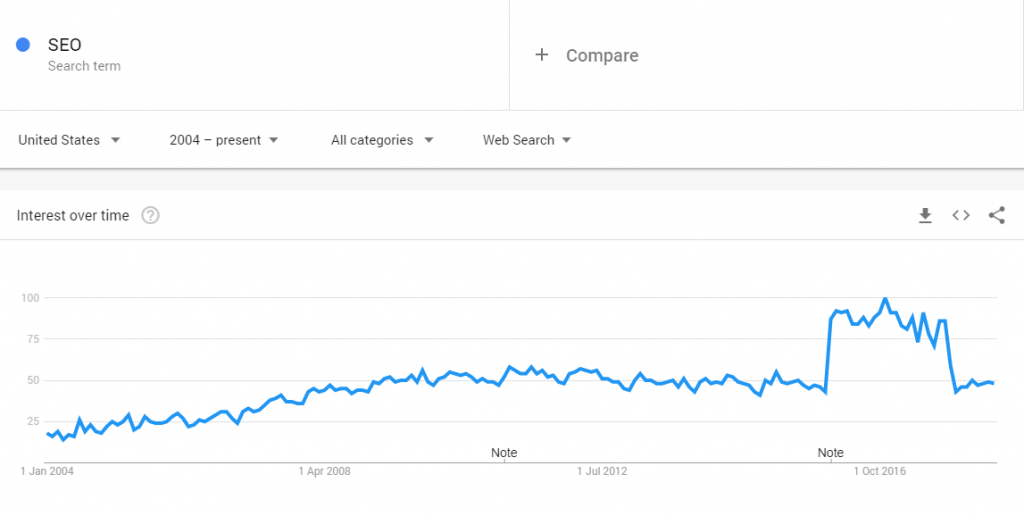
If we’re looking at the evolution of the interest people put into SEO, we can see how beautifully it has grown over the years and it is constantly changing. 
 

Evolution of SEO


SEO is like the popular kid in school. Everybody talks about it. There are some groups that worship it and follow everything what it is doing, but there are also some groups that hate it, don’t like it and speak badly about it.


1. SEO Blends into Your Marketing Funnel


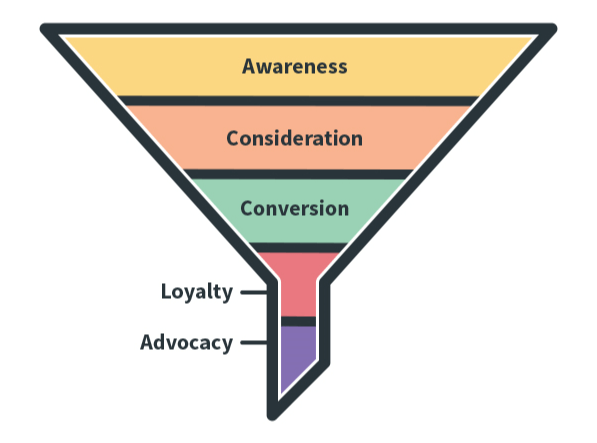
Your marketing funnel starts when the prospect hears about your brand in the awareness stage. It will continue when your brand generates interest, desire and will make them take an action afterward.
 

Marketing funnel and SEO

Source: www.aweber.com


SEO blends in all the stages of your marketing funnel. The most important step is the first one, when you hook the user. But he must find your website. You need search engine optimization to get there, on the first page.


The inbound marketing sales funnel has three stages: top of funnel (TOFU), middle of funnel (MOFU) and bottom of funnel (BOFU). Each stage requires a proper set of marketing tactics and techniques, which includes SEO. So, when I was saying that SEO starts right at the top of the funnel, that happens because there is your audience, and you want to attract a larger portion of it.


Track top of funnel keywords (informational keywords), create content maps and make your site’s structure user-friendly to keep the user as long as you can on your website and you’ll push them down the funnel. In the TOFU stage, the user will land on your blog, which is the most common type of content.


For the middle of funnel, your focus should be on creating high-quality content and have hooks on your website that will keep the user, such as a high loading speed, high quality and lossless images, mobile-friendly website, un-broken pages and lots of other technical SEO requirements. Technical SEO has a great impact on the user’s behavior.


Engaging the users and sending them down the sales funnel can be achieved through CTAs, surveys, content downloads.


At the bottom of funnel you must persuade the user with other techniques. But up to this point, SEO blends very well in each stage of the funnel.


2. SEO Helps You Get into the Spotlight


When we talk about search engine optimization, we talk about creating the best version of our website to get user’s eyes, which nowadays means to be on the first page. And that turns out to be a pain in the neck most of the time.


But it doesn’t need to be annoying. If you follow the natural path of things, SEO can help you achieve the desired position. Hard work and dedication can come a long way.


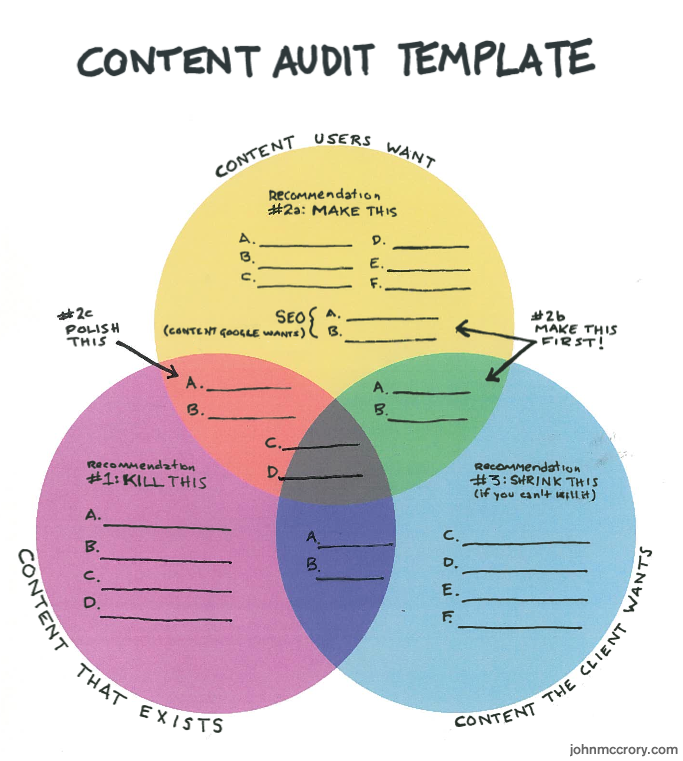
A content audit is needed at this stage, to understand the actual status and then decide what you have to optimize. For a correct content audit, you must gather all the articles into a spreadsheet, add metrics (such as CTR, organic search traffic, internal and external links, shares, comments, rank) and order them to see the pages with the lowest metrics.
 

Content Audit Chart

www.contentmarketingup.com


Use a tool for content optimization and voilà. You have awesome content. Get in the spotlight by promoting it and earn lots of links. Once you’ve managed to get on the first page of Google, you’ll gain visitors, who might become clients. But once you’ve got there, you must work hard to stay put. After that you could take it up a notch. That means social sharing, emailing, promotion, internal linking in other pages that have high influence.


3. SEO Creates a Stronger Relationship with the Audience


If you managed to get on the first page in the search engines, that means you’ve gained the trust of Google or Bing. Which should lead to earning the trust of your audience.


Words play an important role in digital marketing and content is the pivot.


Content marketing is the most effective SEO technique. Websites with blog content have 434% more search engine-indexed pages than other business sites that don’t publish content.


If your page has a good user experience, the audience will like it and you have a great chance to create a strong relationship. But that is not the only indicator. Quality content with valuable information that answers the audience’s questions using their own words is another indicator.    


Integrate a comment section in your blog to hear your audience. Make sure you filter the spammy comments before publishing them. User-generated content is a good sign of quality information. You can speak directly to your audience, hear their thoughts and opinions, allowing you to create a relationship quickly.


4. SEO Pulls out Traffic


Yes, that’s true. SEO can pull out qualified traffic. It turns out search engines drive 300% more traffic to sites than social media.


If done right, SEO can pull your website on the first page and from that moment you’ll have a lot to gain from. That means traffic, too. If your website is in the sight of the viewer, then most probably they will enter your website.


So, the better you optimize your website on-site (with a proper headline, URL, meta description, cover photo and pictures with alt-description), the higher the chances to attract the user on your website. You need to differentiate yourself from the others and be the unicorn in a crowd of donkeys, as Larry Kim often says.


Create unicorn content. This is your best, most magical content, performing among the top 3 percent of all your content.
Larry Kim Larry Kim
CEO MobileMonkey & Founder WordStream
 

5. SEO Is Cost Effective Comparing to PPC


It is not justified that PPC is highly costly comparing to SEO, which is more effective. SEO has a longterm value, while PPC has a shorter lifetime value. As long as you pay, you’ll appear in Google; if you stop paying, then your ad will disappear.


PPC is better to use when you launch a product or your business because at that stage it is harder to get awareness using SEO. PPC works best for promoting products and commercial content because you invest money to gain clients and sales.


You invest in SEO for awareness, for web traffic and other metrics that lead to sales. But the thing is that you don’t need to invest so much money on SEO like you need on PPC.


SEO offers the better value in search marketing. That’s its true strenght.


Studies say that SEO has approximately 20X more traffic opportunity than PPC on both mobile and desktop. And Search Engine Marketing Professionals Organization said that 87% of search engine dollars are spent on PPC vs. 11% spent on SEO efforts.


6. SEO Is Live 24/7


SEO can run free because it is live 24/7. Even when you’re sleeping, or you are offline, it can pull out your site and keep it in the sight of the visitors, because SEO never sleeps.   


A unique perk of optimizing your website is the timeless characteristic. To understand how it works imagine you are looking for a specific product and searching the internet. Each webpage from SERP is like a store you walk in and look around to see if they got what you’re searching for. Those on the first page are open, near to you and well-known businesses (let’s say). If your page is there, then you might get a chance to get a new lead.


But unlike a store, which has open and closing hours, your website has SEO, which means it is open all the time and can receive the potential customers anytime.  


Search engine optimization it is practically like an open sign.


7. SEO Increases Sales and Leads


Since we were talking about new leads and potential clients, SEO puts your website on the map and impacts the buying cycle.  


The thing that differentiates it from other forms of marketing and adds value to it is the fact that sales will increase without having to increase proportionally your promotional costs.


You can start SEO and content with no monetary investment. But if you want to scale your business to get high revenue, then you’ll have to make some investments. In case you want to start with no monetary investment, then you’ll have to put more effort into creating high-linkable content, optimize for money keywords and keywords with a high volume and sustain your content with emailing, social media, syndication and other ways to promote it.


8. SEO Improves Your ROI


SEO can push your marketing goals to better ROI comparing to other forms of marketing. Your website can be a prospect magnet, based on your high-quality keyword and be where your customers are. If you are in the sight of the visitor, you’ll be able to direct them to your website and offer solutions to their questions/problems. 


Your website should be the apple to the user’s pie. ❤


Jayson DeMers, founder of AudienceBloom, had quite a unique approach to the way SEO works as an investment for each business:


SEO works very much like the stock market. You choose your stocks (keywords) based on the knowledge you have at hand, and then you wait. You’ll likely experience periods of growth and decline (like ranking fluctuations), but one thing is certain: the stock market and SEO are both long-term endeavors. There’s no quick path to riches in either case.
jason-demers-link-building-offsite-seo Jayson DeMers
Founder of AudienceBloom


SEO might have one of the biggest ROI compared to other marketing forms.


9. SEO Has the Greatest Impact on Lead Generation


The key to generating more leads for your business is optimizing your site for search engines. According to a study by NewsCreed, 57% of B2B marketers said that SEO has the greatest impact on lead generation.


To generate revenue and expand the local area of your business you must take the online stage and dominate your competitors. The way to do that is to have a well-optimized website.


SEO has the ability to enable the flow of leads, but you have to help it and optimize the inner content through:

  • fitted keywords with high search volumes;
  • high loading speed time websites;
  • quality content;
  • get ahead of your competitors by spying on their content and their SEO strategies.


Search engine optimization plays an important role in cultivating organic traffic and generating leads. The message you transmit through your content is very important. Did they land on commercial or information content? There are money keywords and information keywords. Depending on what type of content they landed on your website, it will give you a more accurate insight on the level the sales funnel they came from: leads, prospects and in the end clients.


According to a report by Chitika Insights, it seems that number 1 position in Google gets 32.5 % of search traffic. And the first 5 positions account for 75.7% of the search traffic. That’s a strong indicator of the power of SEO. If your website is in the first 5 positions, then you’ll have a high chance of attracting leads.


10. SEO Traffic Is More Convertible


One other reason why SEO is crucial for any business online is the power of converting. Indeed, SEO traffic converts better. Search traffic converts 10x higher than the social media on desktops according to a study by SimilarWeb. Moreover, it seems like search is by far the largest traffic driver.
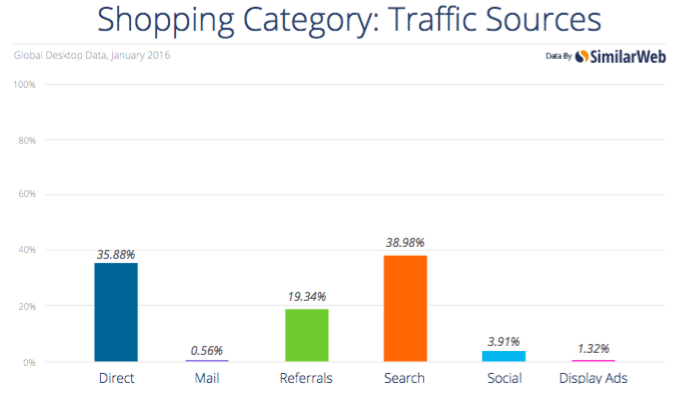
 

Traffic sources report by SimilarWeb


Studies talk by themselves. eMarketer discovered that 76% of US agencies worldwide said SEO provided excellent or good return on investment (ROI). Which better reason to stick to SEO, than these results?


If you’ve managed to find the working SEO strategy for you, then you can’t go wrong and you’ll benefit from juicy results. By positioning your website on the search engines, your business will gain more conversions.


11. SEO Increases Brand Awareness


Besides all the SEO benefits in the internet marketing field that we’ve talked about, SEO has the power to make your brand discovered and remembered, but you have to help it, as usual.  


The sale funnel is a long process, so the visitor has a long way before converting. They might not be prepared to buy from you, but the fact that they entered your website is a good opportunity. They will be aware of what you’re offering before making an action.


SEO helps your website to get awareness.


Let’s say you’re searching for something online, for “how to dye your hair at home” and you want to know more about that. It is the first time dyeing your hair, you don’t know anything about it.
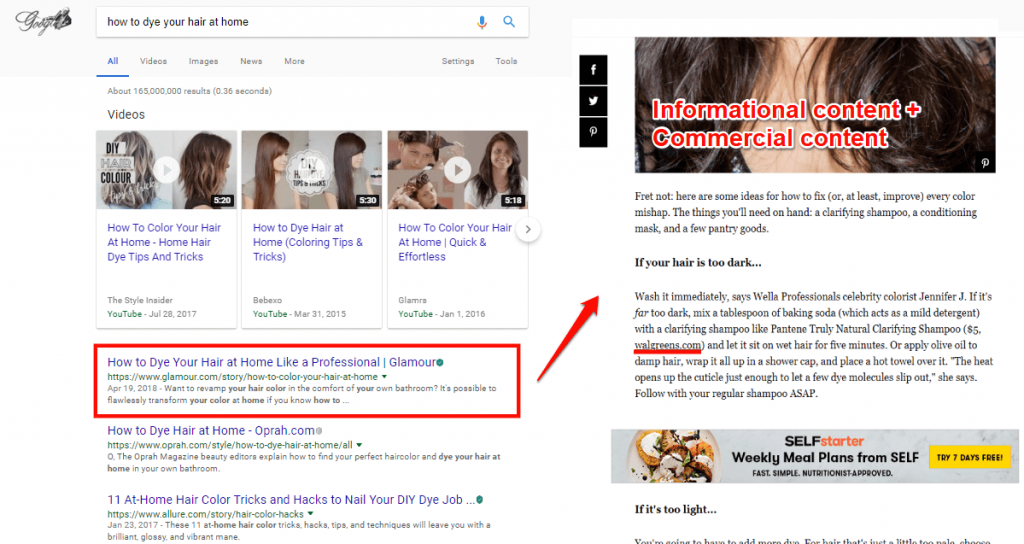


Just like in the example shown above, you find a website where you see informational content along with commercial one (example of product with the price and the name of the store). In case you have a website like this, you might get benefits if people are buying for those type of websites.


Being one of the top results will bring awareness to your website. People will know more about you and might search your website for other information and take other actions around there.


12. SEO Increases Marketing Attribution


When your brand awareness increases, the marketing attribution will increase as well. Attribution represents the number of actions (“touchpoints”) a visitor is taking on your website. Basically, it tracks down the events that engaged the user before converting them.


The more times users see your brand, the better chance to increase the marketing attribution. Better optimized pages, with quality content and trustworthy websites will get you more “touchpoints” from the users.


Unfortunately, just a small amount of marketers use attribution in their marketing strategy. A study by Delhi School of Internet Marketing says that 34.1% of businesses don’t use any attribution model to measure marketing performance. And that’s sad.


Businesses that don’t use attribution might lose 50% of potential sales.


Those who used attribution and lead nurturing generated 50% more sales at 33% lower cost.


13. SEO Is One of the Best PR Strategy


You heard that right, SEO is one of the best PR strategy. You might think they came from two different worlds, but in the online world, SEO takes the form of public relations.


We all know that PR is the practice of spreading information about something (brand, product) or someone in the public eye. SEO can do exactly the same thing. It will bring your brand to the public attention. But for that you need links and quality content, to rank in the top positions.


Links are a form of recognition for your website.


It means that those who linked to your website found useful and valuable information and want to share it to others. This type of action can be categorized as word-of-mouth and PR movement. The more links, the more visibility for your website.


14. SEO Improves CTR


Optimized pages, with a high CTR, influence rankings and achieve top positions. That will improve the results, and get high CTR again. It is an on-going process. SEO and CTR are influencing one another.


A website that is very-well optimized will get featured in SERP and will receive clicks, impressions. A top position in Google can have a high CTR.


 I can most certainly say with confidence that CTR is impacting rank.
Larry Kim Larry Kim
CEO MobileMonkey & Founder WordStream


Usually, pages with a higher CTR tend to have higher conversion rates. Increasing your CTR by 2x will increase your conversion rate by 50%.


There are some ways to step up the game and increase your SEO and, therefore, your CTR:

  • First, start by looking at those pages that have a low click-through-rate using Google Search Console (or Google Analytics):
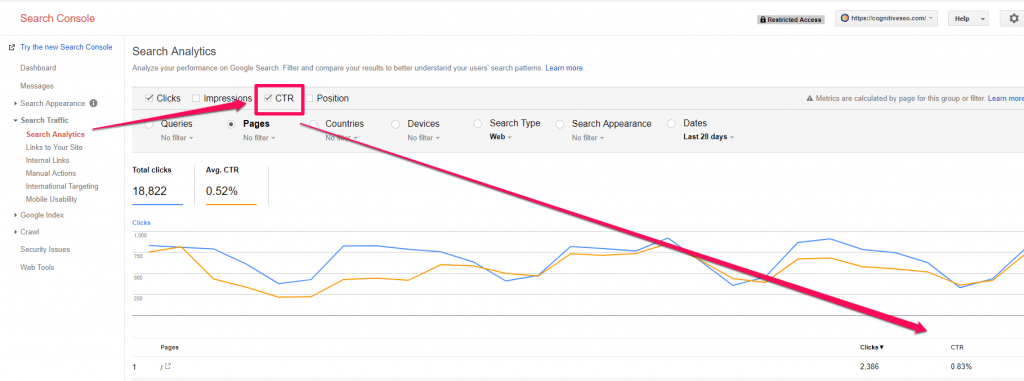
See CTR in Search Console


  • Then look at the pages or queries that have a low CTR but high position. Start by optimizing those pages and their snippets.
  • Another thing you could do is look at the duplicate content on your website and remake the meta descriptions and title tags that are duplicated.
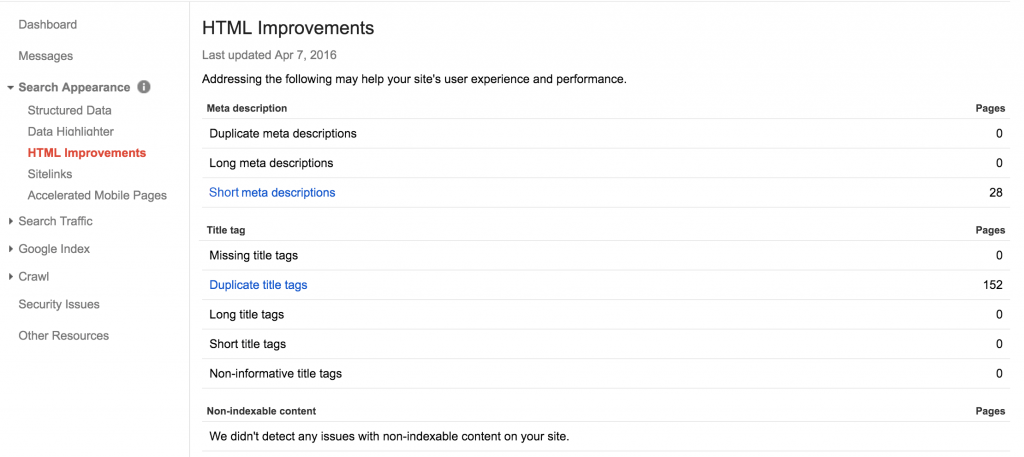
Duplicate contetnt Search Console


15. SEO Can Eliminate Cold-Calling


Invest in SEO, rather than cold-calling. If you’re tired of sending emails, calling on the phone or performing other forms of outreach, then SEO is the only “call” you have to make. After all the reasons we’ve talked on why SEO is important, you can understand that it takes a few steps forward for your business and could eliminate cold calling.


It works pretty simply. Imagine you’d like to contact somebody regarding a proposition or collaboration idea. If you have a well-known brand due to your SEO efforts (that means that it appears in the search results pages for important and convertible keywords) and say you are John from X (the brand you’re representing), then you’ll have a higher chance to get noticed. The discussion can get to a positive result faster and the response rate can be higher.


16. SEO Builds Trust and Credibility


Google has lots of ranking factors and search quality raters that analyze and evaluate ranking websites and pages. Which only proves that Google takes a high interest in showing relevant, trustworthy and newsworthy content to the visitor. SEO on the same note is providing trust and credibility to the website. That type of strong indicators from a website will send quality signals to Google. Not to mention that SEO helps you grow your online reputation. 


Sites that send a strong trustworthy signal have one or more of the following elements:

  • HTTPS protocol;
  • Security certification;
  • Business blog with comments area;
  • Social networking components;
  • Current contact information;
  • High-quality pictures, clean web design and great UX;
  • Recent activity on site (easy to see through the blog);
  • Social media activity (social signals have a strong impact on SEO).
 

17. SEO Is a Long-Term Strategy


It takes approximately 6 months to see optimal website rankings for a new site, and it can go up to 12 months. If you follow a natural path to grow a business online and follow Google’s quality guidelines to increase your website rankings, you have a high advantage. Because once you get a place in the top positions of Google you rarely change it. The only times you can see a decrease in rankings is due to Google algorithm updates or high competition. Studies have shown that search engine results had gotten more useful and relevant over time as 52% of consumers acknowledge.


The thing that I’ve seen working best for ranking in Google is content. Not any type of content, but quality content. The key is to create informational content and connect it with the commercial type (through internal linking) to create linkable content and grow up your website.


A blog can go a long way. 72% of marketers say relevant content creation was the most effective SEO tactic according to Ascend2.


18. More Effective Than Other Traditional Strategies


SEO has proved a lot of times to be more effective than any other traditional strategy (passing flyers, print advertising, television and radio or direct marketing) because the user is searching for something and receives the results. It is not exposed to a information that he doesn’t need at that moment (like it happens in the traditional marketing process).


The popularity of traditional marketing dropped over the years. Digital marketing started to rise and SEO has received the crown to rule over the empire.
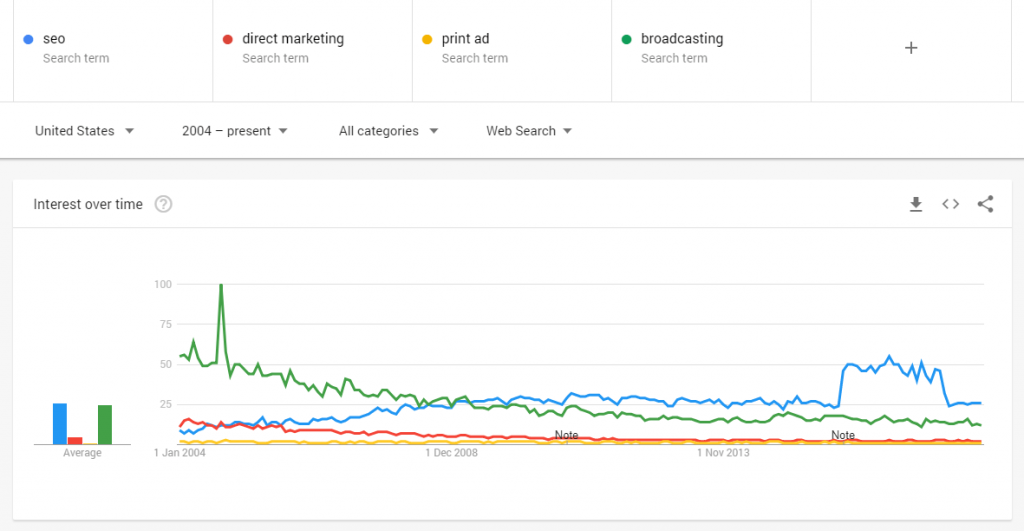
 

Traditional marketing vs. SEO


We can see how broadcasting had a tremendous drop in searches in 2009. Direct marketing had a slow death. And SEO had a natural growth in the last years. We can’t say for certainty that was the real evolution of how traditional marketing involved and SEO evolved, but we can point out people’s interest in them.


SEO starts by creating amazing content. The fact is that content will persuade the user into making an action. 93% of B2B companies say content marketing generates more leads than traditional marketing strategies, which can only prove the graphic from Google Trends.  


19. SEO Can Help You Attract Great Individuals


If you have a strong website and people heard about you, you have a higher chance to attract talent. In case you have open positions in your company and you are searching for some individuals that could fit your team, SEO can be a great “tool”.


On the same topic, TripAdvisor did something really cool in one of their recruitment processes. They were searching for someone in IT and did that through the robots.txt:
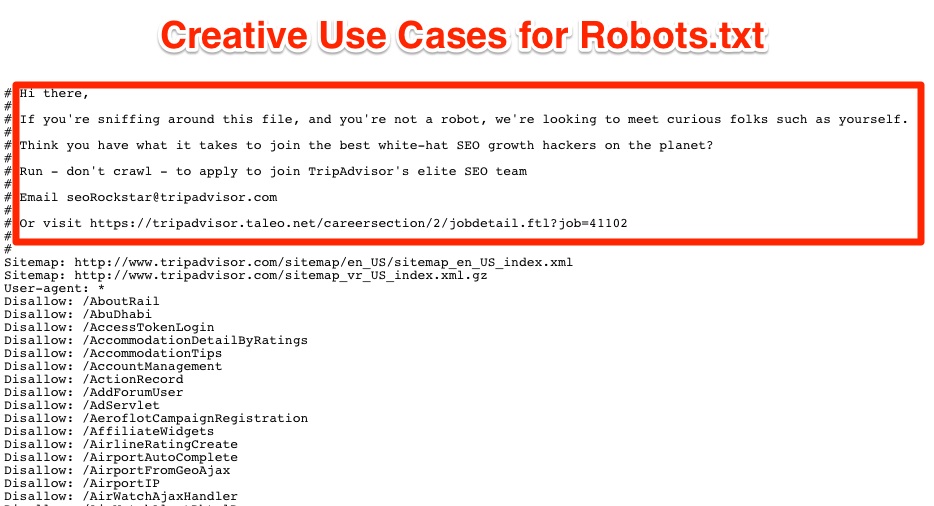
 

tripadvisor-robotstxt


So, either you are using your website to send a message to the future colleagues or offering information on sight, SEO can help you. If you optimize the page for the job you’re offering, you might save some money spent on dedicated platforms or other sorts of promotion.


20. SEO Isn’t the Final Step, but the Center of Things


I hear a lot of people that designed their website and left SEO at the end like it’s some magic powder you can spray on top. No! Wrong and wrong. When a new website is created, SEO is the first thing you should be considering, along with UX.


Take SEO into consideration when you develop your website’s architecture or decide the platform – CMS, the URL syntax, canonical URLs, other HTML codes important for having a reachable and clean website for the bots and users.


You wouldn’t like to be in the situation where you invested a lot of money in your website’s design and after that, you find out that Google doesn’t see your website as it should, the user doesn’t find the website in the search results or has a weird snippet. And after all that investment, you have to spend more money to resolve the issues and make it visible.


21. SEO Can Boost Your Efficiency


All the benefits of SEO that we’ve talked about until now will help your business grow. And SEO is the one that multiplies your efforts. It delivers what promised.


Optimizing your content will get you the benefit of getting a higher space into search, that means more keywords ranking on upper positions offering a higher visibility in SERP.  We tried pushing the content optimization a step higher, by selecting a list of pages and making a massive content optimization a few months back.
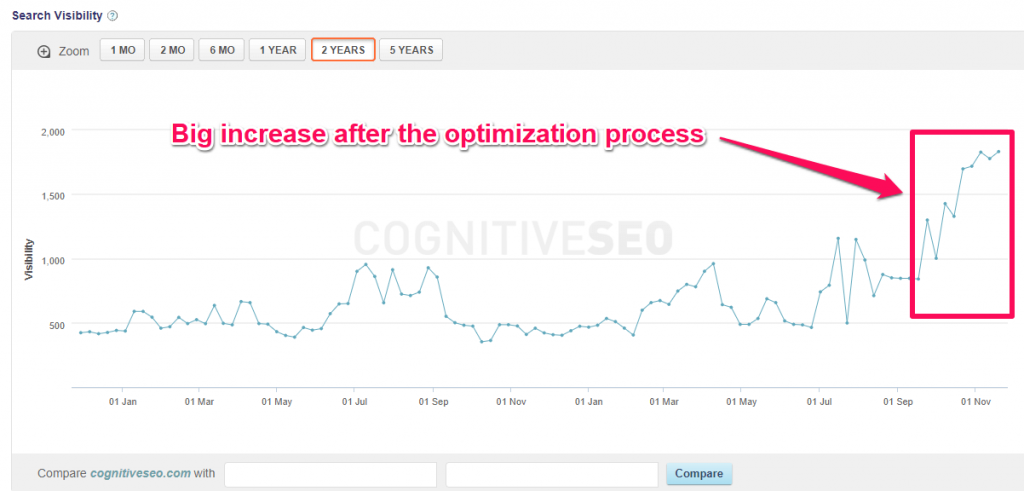
 

Search visibility increase

Source: https://explorer.cognitiveseo.com/?u=cognitiveseo.com&m=*U*#section/4


As you can see the evolution of the search visibility started to have a beautiful increase since the moment we’ve optimized the pages.


SEO is a digital business card.


If you manage to improve the rankings on your website, you can beat up competition and you can beat up skepticism, which are two of the biggest fishes to catch.


Conclusion


The perks of search engine optimization are several. Every SEO expert you ask will tell you how beneficial is SEO for a website. SEO is laser-targeted, which means it can achieve great results and push your marketing goals upper. It is one of the smartest marketing investment you can make at the moment we speak because in online SEO is the form of marketing that has the longest lifespan vs. money spent.


SEO will help you spread your wings through all the web. You need to include it in your marketing mix because it is a lifevest for your business. You can’t survive without SEO, not now or never.  It has lots of advantages that can bring awareness to your business and bring a higher impact on your marketing goals. Driving traffic to your website can be easier once you’ve gained a high position of Google due to a well-done SEO campaign.  


Either you’re building an SEO campaign for the first time or you’re doing this for a long time, you must always remember that SEO is a long-term strategy, and also a continuous process of improvement. Use this guide to SEO to get the results you desire. 

The post Why SEO Is Important to Any Business Nowadays. Top 21 SEO Benefits appeared first on SEO Blog | cognitiveSEO Blog on SEO Tactics & Strategies.


SEO Blog | cognitiveSEO Blog on SEO Tactics & Strategies

Using the Flowchart Method for Diagnosing Ranking Drops - Whiteboard Friday

Posted by KameronJenkins

Being able to pinpoint the reason for a ranking drop is one of our most perennial and potentially frustrating tasks as SEOs. There are an unknowable number of factors that go into ranking these days, but luckily the methodology for diagnosing those fluctuations is readily at hand. In today"s Whiteboard Friday, we welcome the wonderful Kameron Jenkins to show us a structured way to diagnose ranking drops using a flowchart method and critical thinking.

Flowchart method for diagnosing ranking drops

Click on the whiteboard image above to open a high-resolution version in a new tab!

Video Transcription

Hey, everyone. Welcome to this week"s edition of Whiteboard Friday. My name is Kameron Jenkins. I am the new SEO Wordsmith here at Moz, and I"m so excited to be here. Before this, I worked at an agency for about six and a half years. I worked in the SEO department, and really a common thing we encountered was a client"s rankings dropped. What do we do?

This flowchart was kind of built out of that mentality of we need a logical workflow to be able to diagnose exactly what happened so we can make really pointed recommendations for how to fix it, how to get our client"s rankings back. So let"s dive right in. It"s going to be a flowchart, so it"s a little nonlinear, but hopefully this makes sense and helps you work smarter rather than harder.

Was it a major ranking drop?: No

The first question I"d want to ask is: Was their rankings drop major? By major, I would say that"s something like page 1 to page 5 overnight. Minor would be something like it just fell a couple positions, like position 3 to position 5.

We"re going to take this path first. It was minor.

Has there been a pattern of decline lasting about a month or greater?

That"s not a magic number. A month is something that you can use as a benchmark. But if there"s been a steady decline and it"s been one week it"s position 3 and then it"s position 5 and then position 7, and it just keeps dropping over time, I would consider that a pattern of decline.

So if no, I would actually say wait.

  • Volatility is normal, especially if you"re at the bottom of page 1, maybe page 2 plus. There"s going to be a lot more shifting of the search results in those positions. So volatility is normal.
  • Keep your eyes on it, though. It"s really good to just take note of it like, "Hey, we dropped. Okay, I"m going to check that again next week and see if it continues to drop, then maybe we"ll take action."
  • Wait it out. At this point, I would just caution against making big website updates if it hasn"t really been warranted yet. So volatility is normal. Expect that. Keep your finger on the pulse, but just wait it out at this point.

If there has been a pattern of decline though, I"m going to have you jump to the algorithm update section. We"re going to get there in a second. But for now, we"re going to go take the major rankings drop path.

Was it a major ranking drop?: Yes

The first question on this path that I"d want to ask is:

Was there a rank tracking issue?

Now, some of these are going seem pretty basic, like how would that ever happen, but believe me it happens every once in a while. So just before we make major updates to the website, I"d want to check the rank tracking.

I. The wrong domain or URL.

That can be something that happens a lot. A site maybe you change domains or maybe you move a page and that old page of that old domain is still listed in your ranking tracker. If that"s the case, then the rank tracking tool doesn"t know which URL to judge the rankings off of. So it"s going to look like maybe you dropped to position 10 overnight from position 1, and that"s like, whoa, that"s a huge update. But it"s actually just that you have the wrong URL in there. So just check that. If there"s been a page update, a domain update, check to make sure that you"ve updated your rank tracker.

II. Glitches.

So it"s software, it can break. There are things that could cause it to be off for whatever reason. I don"t know how common that is. It probably is totally dependent on which kind of software you use. But glitches do happen, so I would manually check your rankings.

III. Manually check rankings.

One way I would do that is...

  • Go to incognito in Google and make sure you"re logged out so it"s not personalized. I would search the term that you"re wanting to rank for and see where you"re actually ranking.
  • Google"s Ad Preview tool. That one is really good too if you want to search where you"re ranking locally so you can set your geolocation. You could do mobile versus desktop rankings. So it could be really good for things like that.
  • Crosscheck with another tool, like Moz"s tool for rank tracking. You can pop in your URLs, see where you"re ranking, and cross-check that with your own tool.

So back to this. Rank tracking issues. Yes, you found your problem. If it was just a rank tracking tool issue, that"s actually great, because it means you don"t have to make a lot of changes. Your rankings actually haven"t dropped. But if that"s not the issue, if there is no rank tracking issue that you can pinpoint, then I would move on to Google Search Console.

Problems in Google Search Console?

So Google Search Console is really helpful for checking site health matters. One of the main things I would want to check in there, if you experience a major drop especially, is...

I. Manual actions.

If you navigate to Manual Actions, you could see notes in there like unnatural links pointing to your site. Or maybe you have thin or low-quality content on your site. If those things are present in your Manual Actions, then you have a reference point. You have something to go off of. There"s a lot of work involved in lifting a manual penalty that we can"t get into here unfortunately. Some things that you can do to focus on manual penalty lifting...

  • Moz"s Link Explorer. You can check your inbound links and see their spam score. You could look at things like anchor text to see if maybe the links pointing to your site are keyword stuffed. So you can use tools like that.
  • There are a lot of good articles too, in the industry, just on getting penalties lifted. Marie Haynes especially has some really good ones. So I would check that out.

But you have found your problem if there"s a manual action in there. So focus on getting that penalty lifted.

II. Indexation issues.

Before you move out of Search Console, though, I would check indexation issues as well. Maybe you don"t have a manual penalty. But go to your index coverage report and you can see if anything you submitted in your sitemap is maybe experiencing issues. Maybe it"s blocked by robots.txt, or maybe you accidentally no indexed it. You could probably see that in the index coverage report. Search Console, okay. So yes, you found your problem. No, you"re going to move on to algorithm updates.

Algorithm updates

Algorithm updates happen all the time. Google says that maybe one to two happen per day. Not all of those are going to be major. The major ones, though, are listed. They"re documented in multiple different places. Moz has a really good list of algorithm updates over time. You can for sure reference that. There are going to be a lot of good ones. You can navigate to the exact year and month that your site experienced a rankings drop and see if it maybe correlates with any algorithm update.

For example, say your site lost rankings in about January 2017. That"s about the time that Google released its Intrusive Interstitials Update, and so I would look on my site, if that was the issue, and say, "Do I have intrusive interstitials? Is this something that"s affecting my website?"

If you can match up an algorithm update with the time that your rankings started to drop, you have direction. You found an issue. If you can"t match it up to any algorithm updates, it"s finally time to move on to site updates.

Site updates

What changes happened to your website recently? There are a lot of different things that could have happened to your website. Just keep in mind too that maybe you"re not the only one who has access to your website. You"re the SEO, but maybe tech support has access. Maybe even your paid ad manager has access. There are a lot of different people who could be making changes to the website. So just keep that in mind when you"re looking into it. It"s not just the changes that you made, but changes that anyone made could affect the website"s ranking. Just look into all possible factors.

Other factors that can impact rankings

A lot of different things, like I said, can influence your site"s rankings. A lot of things can inadvertently happen that you can pinpoint and say, "Oh, that"s definitely the cause."

Some examples of things that I"ve personally experienced on my clients" websites...

I. Renaming pages and letting them 404 without updating with a 301 redirect.

There was one situation where a client had a blog. They had hundreds of really good blog posts. They were all ranking for nice, long tail terms. A client emailed into tech support to change the name of the blog. Unfortunately, all of the posts lived under the blog, and when he did that, he didn"t update it with a 301 redirect, so all of those pages, that were ranking really nicely, they started to fall out of the index. The rankings went with it. There"s your problem. It was unfortunate, but at least we were able to diagnose what happened.

II. Content cutting.

Maybe you"re working with a UX team, a design team, someone who is looking at the website from a visual, a user experience perspective. A lot of times in these situations they might take a page that"s full of really good, valuable content and they might say, "Oh, this is too clunky. It"s too bulky. It has too many words. So we"re going to replace it with an image, or we"re going to take some of the content out."

When this happens, if the content was the thing that was making your page rank and you cut that, that"s probably something that"s going to affect your rankings negatively. By the way, if that"s happening to you, Rand has a really good Whiteboard Friday on kind of how to marry user experience and SEO. You should definitely check that out if that"s an issue for you.

III. Valuable backlinks lost.

Another situation I was diagnosing a client and one of their backlinks dropped. It just so happened to be like the only thing that changed over this course of time. It was a really valuable backlink, and we found out that they just dropped it for whatever reason, and the client"s rankings started to decline after that time. Things like Moz"s tools, Link Explorer, you can go in there and see gained and lost backlinks over time. So I would check that out if maybe that might be an issue for you.

IV. Accidental no index.

Depending on what type of CMS you work with, it might be really, really easy to accidentally check No Index on this page. If you no index a really important page, Google takes it out of its index. That could happen. Your rankings could drop.So those are just some examples of things that can happen. Like I said, hundreds and hundreds of things could have been changed on your site, but it"s just really important to try to pinpoint exactly what those changes were and if they coincided with when your rankings started to drop.

SERP landscape

So we got all the way to the bottom. If you"re at the point where you"ve looked at all of the site updates and you still haven"t found anything that would have caused a rankings drop, I would say finally look at the SERP landscape.

What I mean by that is just Google your keyword that you want to rank for or your group of keywords that you want to rank for and see which websites are ranking on page 1. I would get a lay of the land and just see:

  • What are these pages doing?
  • How many backlinks do they have?
  • How much content do they have?
  • Do they load fast?
  • What"s the experience?

Then make content better than that. To rank, so many people just think avoid being spammy and avoid having things broken on your site. But that"s not SEO. That"s really just helping you be able to compete. You have to have content that"s the best answer to searchers" questions, and that"s going to get you ranking.

I hope that was helpful. This is a really good way to just kind of work through a ranking drop diagnosis. If you have methods, by the way, that work for you, I"d love to hear from you and see what worked for you in the past. Let me know, drop it in the comments below.

Thanks, everyone. Come back next week for another edition of Whiteboard Friday.

Video transcription by Speechpad.com


Sign up for The Moz Top 10, a semimonthly mailer updating you on the top ten hottest pieces of SEO news, tips, and rad links uncovered by the Moz team. Think of it as your exclusive digest of stuff you don"t have time to hunt down but want to read!

The Moz Blog

Sunday, 29 July 2018

Google: H Tags as a Ranking Factor

How important are using <h> tags – and more specifically multiple <h> tags, such as using <h1>, <h2>, <h3> and more – on a page when considering it from an SEO point of view?  What about the benefits to site visitors? The question came up specifically about the use of <h> tags and whether they […]

The post Google: H Tags as a Ranking Factor appeared first on The SEM Post.


The SEM Post

Search Buzz Video Recap: Google Algorithm Update, Quality Raters Guidelines, AdWords Now Google Ads & Speakable Markup

This week was pretty busy, we had an unconfirmed Google algorithm update. Google updated their search quality raters guidelines, removed them from being downloaded, added them back - oh, and John Mueller hasnât read them yet...

Search Engine Roundtable